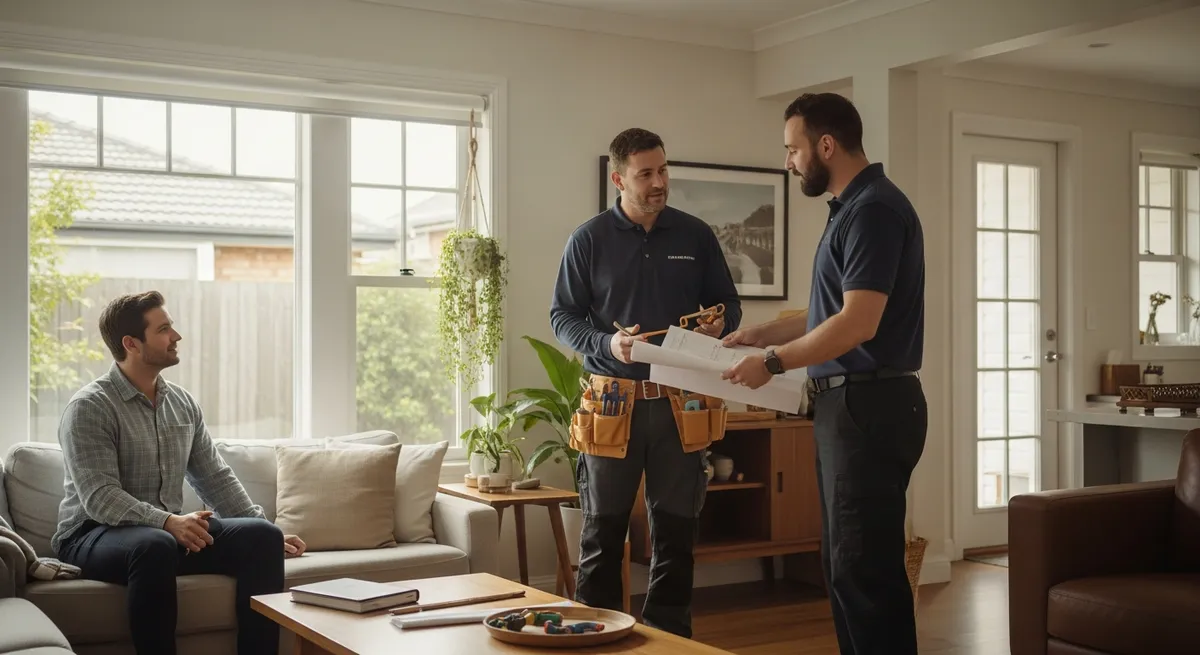
It usually starts with a handshake. A firm one. The guy - let's call him Dave - looks you dead in the eye. Like, really looks at you. He parks the truck neatly. He might even put on those little bootie covers before stepping on the hardwood. (Nice touch, right? Makes you feel special.) You feel relief washing over you. Finally, someone who "gets" it. Fast forward six weeks. Your kitchen is a gutted skeleton of 2x4s. There is sheetrock dust on your toothbrush. And Dave? Dave went dark on Tuesday. Radio silence. This isn’t just bad luck. It’s a mathematical certainty if you rely on "good vibes" to hire a pro. The industry is designed to exploit your politeness.² And honestly? We let them do it. We hand over five-figure checks to strangers because we don't want to make things awkward. That stops now.
Your Gut is a Liar (Sorry, But It Is)
Here’s the ugly truth. (And I’ve seen this play out a hundred times). We think we’re good judges of character. We aren’t. Not even close. You meet a guy who talks about his kids, maybe compliments your landscaping. Boom. Your brain labels him "Safe."
But competence - the actual ability to build stuff - has zero correlation with charisma. None. Zero.
The best craftsmen I know? Usually grumpy introverts. They barely make eye contact. They just want to work. The guys with the polished sales pitch? They’re usually the ones who sub everything out to the lowest bidder while they go play golf. Or worse.
The Federal Trade Commission gets thousands of complaints a year about this.¹ Thousands. And those are just the people angry enough to file a report. Most people just eat the loss, cry in their half-finished bathroom, and pay someone else to fix it. It’s a mess.
The "Deposit" Trap
Let’s talk money. (I know, I know - it feels gross to talk about. Money always does). But this is where you get robbed.
The Pitch: "I need 50% upfront to buy materials."
The Reality: No. Just... no. A solvent business has credit accounts with suppliers. If he needs your cash to buy lumber for your job, he’s likely using it to pay off the debt from his last job. It’s a Ponzi scheme with power tools.³
I once saw a homeowner hand over $15,000 for "cabinets." The contractor used it to fix his transmission and go to Disney World. The cabinets? Never ordered. (That lawsuit is still ongoing, by the way).
The Boring Fix: Ignore the Person, Hire the Paperwork
So. How do we actually stop the bleeding? You stop hiring people. You hire paperwork. (Boring, right? Stick with me).
If a contractor balks at a detailed scope of work, let him walk. Run, actually.
A legitimate pro loves a contract because it protects him from you. (Yes, clients can be nightmares too). If he hands you a one-page estimate reading 'Remodel Bathroom: $12,000,' throw it in the trash. Burn it.
You need specifics. Painful specifics.
Why? Because when he installs the tile crooked, "Install new tile" means he fulfilled the contract. He installed it. You didn't say it had to be straight. (See how this works?)
The "Nuclear Option" for Payment
This is the part that contractors hate. Do it anyway.
Never pay by time. Never. Unless you enjoy watching a guy drink coffee on your dime for three hours. Pay by milestone.
It works like this:
See that last 30%? That is your leverage. It is the only power you have. Once you write that final check, you are dead to him. He’s gone. Poof. So hold onto it like your life depends on it. (Because your sanity definitely does).
Red Flags That Look Like Green Flags
Scammers are getting smarter. Evolving, really. They don't look like villains anymore. No twirly mustaches. They adapt. Here are the "Green Flags" that are actually traps:
"I can start tomorrow!"Translation: I have no other work. Why does nobody else want to hire me? Good contractors are busy. If he is free tomorrow... ask why. Seriously, ask.
"I don't need a permit for this."Translation: I don't want the city inspector looking at my wiring. (And finding the mistakes). (Also, good luck selling your house later when the unpermitted addition doesn't show up on tax maps).
"I have extra materials from another job."Translation: I’m going to install whatever junk I have lying around, not what you actually want.
Action Plan: The 48-Hour Vet
Okay, you found a guy. He seems normal. He didn't ask for cash upfront. Now, you do the work.
Don't just ask for references. References are useless. (Who’s going to give you the number of the guy they screwed over? Nobody. They give you their mom’s number).
Do this instead:
1. The "Certificate" Test Ask for his Certificate of Insurance (COI). But here’s the trick - don't let him hand you a photocopy. Ask him to have his insurance agent email it to you directly. A scammer can Photoshop a document in five minutes. He can't fake an email from a State Farm agent.
2. The Court Search Go to your county clerk’s website. Type in his name. Type in his business name. Search for 'Civil' or 'Small Claims' records. If the list of lawsuits is longer than your grocery list? Run. Fast. Do not ask for an explanation. Don't let him explain. Just run.
3. The "Supplier" Call Ask him where he buys his lumber or tile. Then call that supply house. Ask the desk guy, "Hey, does Dave from Dave’s Construction pay his bills on time?" If there is a long pause on the line... well. There is your answer. Loud and clear.
Why You Need to Be "The Mean Client"
Look. I get it. I really do. You want to be the nice guy. We all do.
But being the "cool" client is expensive. It costs you money, sleep, and creates gray hairs you didn't know you could grow.
Be the "annoying" client. Be the one who asks for the lien waiver. Be the person checking the level on the door frame. Watch him sweat. Be the one who says: 'No check until the trash is gone.' And mean it.
Dave might roll his eyes. He might sigh. But guess what? He’ll finish the job. And that is the point, isn't it? The whole point.
FAQ: The Stuff You Are Too Embarrassed to Ask
Q: Can I pay cash to dodge sales tax? A: Can you? Sure. Should you? Absolutely not. No paper trail means no proof. If he walks, that money never existed. (And honestly, tax fraud isn't the best foundation for a business relationship).
Q: He says permits are just a government money grab. A: Maybe they are. Probably are, in some towns. But do you know what else they are? A safety check. The inspector doesn't care if the contractor likes him. He cares if your deck is going to collapse during your Fourth of July party.
Q: What if I already paid him and he's ghosting me? A: Stop texting. Send a certified letter. Demand performance by a specific date or a refund. Then call the bond company (you did get his bond info, right?). If that fails? Small claims court. It's painful. Sucks, actually. But it is the only way.
Q: What if he wants me to buy the materials myself? A: Be careful here. While it saves you the markup, it also shifts the liability. If you buy the tile and it's the wrong shade, that's on you, not him. Plus, it usually means he has no credit with suppliers. Red flag.
Q: Should I sign a "Cost-Plus" contract? A: For a kitchen remodel? No. Cost-plus means you pay for materials/labor plus a fee. This gives the contractor zero incentive to be efficient. In fact, the slower he works, the more he makes. Stick to a Fixed Price contract for standard renovations.
References
Disclaimer: This article is for informational purposes only and does not constitute legal or financial advice. Construction laws vary by state. Consult a qualified attorney or construction professional before signing contracts or making large payments.