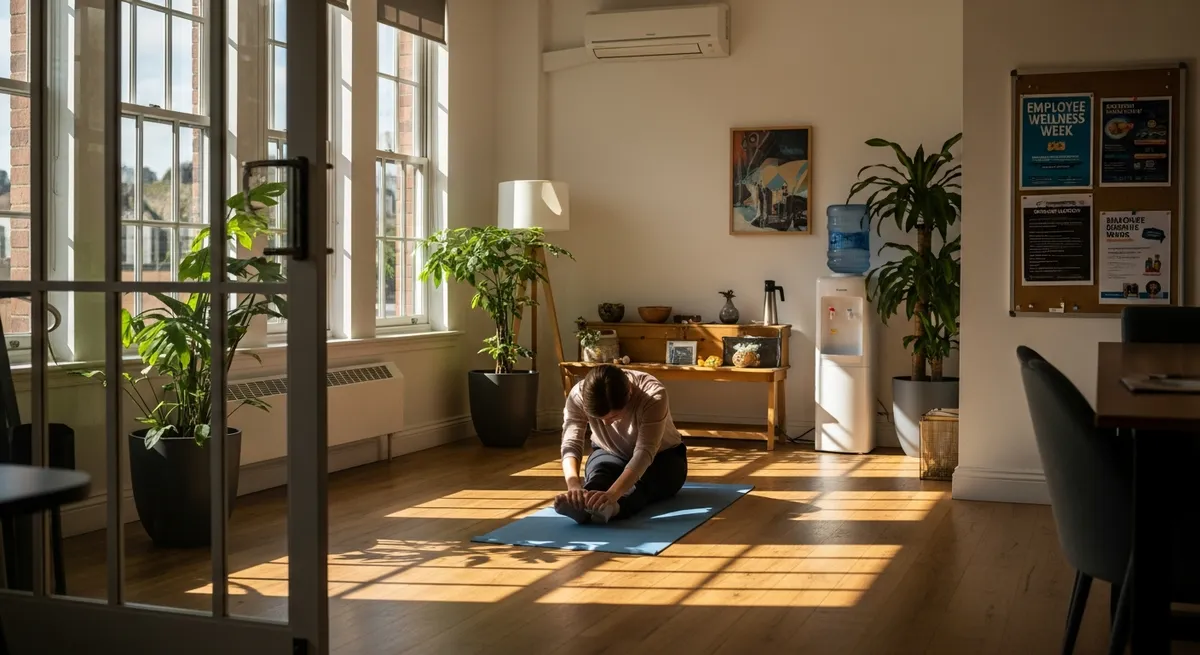
I often wonder what specific transaction occurs within the human spirit when one accepts a lukewarm kale smoothie as a fair trade for forty-eight hours of personal freedom. (It is a terrible deal, naturally, yet we sign the contract every single Monday morning.) I have spent twenty years watching the corporate wellness industry grow from a few scattered gym memberships into a behemoth that rivals small national economies. (I once saw a man trade a promotion for a standing desk and I still have nightmares about the ergonomics of his soul.) You are currently sitting at your desk. The fluorescent lights are humming with the frequency of a low-grade migraine that has decided to move in and pay rent. Suddenly, you receive an automated notification about a Mindful Monday webinar. It is insulting. It is absurd. It is the modern office in a nutshell. (I personally find that mindfulness is difficult to achieve when my inbox is screaming at me like a caffeinated toddler.)
Meanwhile, your actual deadline is Friday. Your boss - let us call him Greg - just added three more projects to your plate with the casual indifference of a man ordering extra fries. You have not seen a vegetable that was not on a pizza in four days. (Pizza is technically a vegetable in some school districts, but Greg is not that generous.) The logic of these programs seems sound on paper. A healthy worker is a productive worker. But the reality is far more cynical. We are seeing a rise in what experts call performative wellness. This is where the appearance of caring for your health is prioritized over your actual health. It is a masquerade. I have seen the masks. (They are usually made of recycled paper and printed with platitudes about work-life balance.)
The data is in. It is not pretty. A massive study from the University of Oxford, involving over 46,000 workers, found that most individual-level mental health interventions had no positive effect. I am talking about resilience training. I am talking about mindfulness apps. I am talking about stress management workshops. (It turns out that telling someone to breathe deeply while they are being crushed by a heavy boulder is not particularly helpful.) The study, published in the Industrial Relations Journal in 2024, suggests these tools do not move the needle. Not even a little. I checked the math twice because I wanted it to be wrong. It was not. (The lead researcher, William J. Fleming, essentially confirmed that we are all paying for digital bandaids to cover up structural fractures.)
I remember a specific instance at a former firm. The management was led by a man named Arthur. Arthur wore sweater vests even in the humid peak of summer. (He also ate hard-boiled eggs at his desk, which is a workplace crime that should be prosecuted by the United Nations.) Arthur decided to install a nap pod in the middle of our open-plan office. It was a sleek, white orb. It looked like something out of a science fiction film where the robots eventually kill everyone. The problem was simple. If you actually used the pod, Arthur would stare at you through the glass with the intensity of a hawk watching a field mouse. You were not resting. You were on display. It was a pitfall. A very expensive, spherical pitfall. (I tried it once and felt like a very stressed goldfish.)
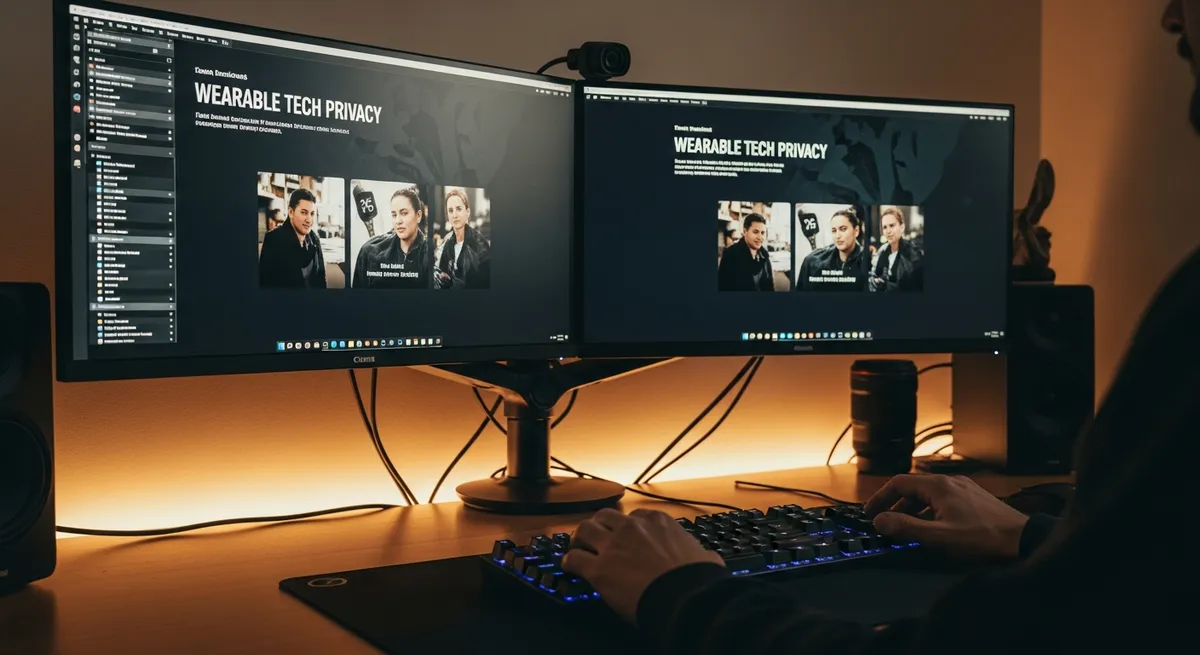
If the environment is toxic, no amount of yoga will fix the problem. The Centers for Disease Control and Prevention notes that chronic stress can lead to a host of physical ailments. We are talking about cardiovascular disease. We are talking about a weakened immune system. (My immune system once gave up entirely after a three-week stint of eighty-hour shifts; I caught a cold from a television commercial.) Yet, instead of reducing the workload that causes the stress, companies offer a webinar. They offer subsidized granola. They offer a step challenge with a popular fitness tracker. It is like handing someone a small umbrella during a hurricane and telling them to stay dry through the power of positive thinking. It is a joke. But nobody is laughing. (Except maybe the people selling the granola.)
We must acknowledge that the transition from performative to structural support is not an easy one. It requires a fundamental shift in how we value human labor. Many of the companies I have worked with over the years are terrified of giving up control over their employees' schedules. They worry that if they allow for true flexibility, the work will simply not get done. However, the data suggests the opposite. According to the Gallup 2024 State of the Global Workplace report, employee engagement is at a precarious low because of exactly this lack of autonomy. When employees feel trusted and respected, they are far more likely to go above and beyond for the organization. (Trust is a cheaper currency than kale, yet it is much harder to find in the wild.)
I once worked for a woman named Sarah who allowed me to work from a cabin for a week while I dealt with a personal crisis. (Sarah was the kind of person who remembered your birthday but did not make a big, awkward production out of it.) I ended up finishing my biggest project two days early because I was so grateful not to be in a cubicle. It was not the air in the cabin that helped; it was the absence of Greg and his eggs. A 2022 survey by a prominent health policy research organization found that while 58 percent of large firms offer wellness programs, only a fraction of employees actually participate. Why? Because they do not feel they have the time. (It is hard to attend a seminar on time management when you have five meetings during the seminar.)
The most valuable thing an employer can give you is not a wearable device. It is the time and space to live your life. If you are in a leadership position, the most radical thing you can do for wellness is to model a healthy work-life balance yourself. Stop sending that quick thought email at 11:00 PM. It is never a quick thought, and it will still be there in the morning. (My neighbor Bob looks ten years younger than he did in 2022 because he finally found a boss who does not believe in midnight digital intrusions.) When a company is truly committed to the health of its staff, it looks at the systemic causes of exhaustion. This might mean implementing a no-meeting Friday or strictly enforcing a policy that prevents managers from sending emails during the night.
So, where does that leave us? It leaves us with the realization that wellness is not something that can be bought in a subscription package. If you want to feel better, you do not need an app. You need a boundary. You need a boss who does not email you at ten at night about a spreadsheet. (I am looking at you, Greg.) The industry will keep selling the smoothies. They will keep selling the orbs. But the truth is much simpler. A healthy workplace is one where you have enough time to actually live your life. Everything else is just expensive noise. We need to stop measuring wellness by the absence of disease and start measuring it by the presence of vitality. A workplace that fosters wellness is one where people feel safe to make mistakes, safe to ask for help, and safe to disconnect. Gone. That is the point.
The corporate wellness industry is at a crossroads. We can continue down the path of surface-level perks that provide a convenient cover for a culture of overwork, or we can embrace a more difficult, honest approach to human health. The data is clear: the current model of individual-focused interventions is failing to move the needle on the most significant health crises facing modern workers. We do not need more apps; we need more empathy and better systems. Focus on the structural changes you can influence, protect your boundaries with the ferocity of a dragon guarding gold, and remember that a free juice box is not a substitute for a healthy life. (I have yet to meet a juice box that could pay my mortgage or give me my Saturday back.)
Myth vs. Fact
Myth: Wellness programs save companies money by reducing healthcare costs.
Fact: A study published in JAMA in 2019 found that after 18 months, a workplace wellness program had no significant effect on clinical measures of health or healthcare spending.
❓ Frequently Asked Questions
❓ Do workplace wellness programs actually improve physical health?
While some individuals might find personal motivation in a step challenge, large-scale studies often show no significant difference in clinical health markers like blood pressure or cholesterol between participants and non-participants over the long term. (I am still waiting for the day when a pedometer actually cleans out my arteries, but I am not holding my breath.)
❓ Why do companies keep investing in wellness if the data is mixed?
It is often about recruitment and public relations rather than purely clinical outcomes. Offering a suite of wellness perks makes a company look modern and empathetic on social media, even if the underlying workload remains fundamentally unsustainable for the average human being. (It is much cheaper to buy a few yoga mats than it is to hire two more people to handle the workload.)
❓ What should I do if my wellness program feels like a burden?
If you are burned out because you have too much work and no control over your schedule, a ten-minute breathing exercise is unlikely to solve the problem. It is like trying to put out a house fire with a very expensive, brand-name squirt gun. (Breathing is good, but so is having a weekend where you do not check your phone every eleven minutes.)
❓ What are the most effective types of wellness initiatives?
Research indicates that structural changes - such as flexible scheduling, increased employee autonomy, and manageable workloads - have a much larger impact than peripheral perks. By focusing on employee resilience, a company might be shifting the burden of stress management onto you rather than addressing the toxic environmental factors that made you stressed in the first place.
❓ Can I decline to participate in corporate wellness programs?
In most cases, yes, though some companies offer incentives that make it feel mandatory. You must weigh the benefits against the privacy risks. (I personally do not want my employer knowing exactly how many steps I took while I was supposed to be writing this column.)
References:
Disclaimer: This article is for informational purposes only and does not constitute professional medical, financial, or legal advice. Corporate wellness programs and health outcomes vary by individual and organization. Always consult with a qualified healthcare provider or HR professional before making significant changes to your health or employment routine.