I am awake at two in the morning, blinking at a screen that tells me my thyroid is why I cannot recall where I parked my car. (I suspect the actual culprit is a severe lack of sleep and mediocre gin.) My neighbor Brenda recently spent between $350 and $450 on a glowing wearable gadget that aligns her gym schedule with her cycle. (I suspect she just likes things that vibrate.) She is absolutely certain this gold-plated plastic is the magical key to her vitality in 2026.
We have entered the golden age of FemTech, a sector that Grand View Research suggests will reach seventy-five billion dollars by 2030.¹ (In the digital landscape of 2026, it seems every other advertisement I see is for a smart ring.) This is a massive amount of money to spend on subscriptions that merely confirm you are, in fact, currently menstruating. These companies utilize soft pastels and vague wellness terminology to mask the reality that most of these gadgets have never seen the inside of a clinical trial. They are not medical tools. They are accessories with a superiority complex. I have seen this before. I once spent between $150 and $250 on a scale that told me my body fat percentage was thirty percent one minute and twelve percent the next. (Apparently, I am a biological enigma, or the scale was just a very expensive liar.)
The Regulatory Loophole and the Digital Privacy Nightmare
Here is something that irritates me more than a lukewarm latte. The Food and Drug Administration often labels these items as General Wellness products, which means they escape the rigorous oversight usually reserved for actual medical hardware.² (It is the administrative equivalent of a hall pass for companies that want to make big claims without having to produce big data.) You are paying for a guess. It is a fancy, gold-plated guess. I have made my share of bad investments - like the time I bought a literal ton of antique bricks for a patio I never built - but at least those bricks did not pretend to know my hormone levels. According to a report by the American Medical Association, this lack of oversight creates a wild west of health claims that can confuse consumers who believe they are using diagnostic-grade equipment.
These companies rely heavily on anecdotes. They find one woman who felt slightly less bloated after wearing their bracelet for a week and they put her face on a billboard in Times Square. (I suspect those women also have housekeepers and personal chefs, but that is never mentioned in the copy.) These personal stories are incredibly persuasive. Personal stories are not clinical proof. We want to believe that a $60-$80 a month subscription can fix our chronic exhaustion. It cannot. Only a nap and a better boss can do that. I have a friend named Dave who spent a fortune on a ring that tracks his sleep, only to have the ring tell him he was tired. He knew he was tired. He had a newborn. (He did not need a piece of jewelry to confirm that he was hallucinating from sleep deprivation.)
This is where it gets dark. My friend Sarah - an attorney who specializes in digital privacy and drinks far too much kombucha - told me that your data is often the real profit margin for these startups. When you track your cycle or your symptoms, you are generating a digital footprint that is incredibly valuable to researchers and marketers alike. They want to know when you are hungry. They want to know when you are emotional. (And honestly, I do not want a stranger in a cubicle in Palo Alto knowing when I am feeling particularly irritable and prone to impulse-buying shoes.)
In a post-Roe v. Wade environment, this data carries significant legal risks that many users do not fully grasp. It is not just about getting advertisements for tampons or prenatal vitamins. It is about a permanent, searchable record of your biological life. A 2024 report in the Journal of Medicine highlighted that these applications often share data with third parties.³ It is sold. It is traded. (I am not a lawyer, but I know that a privacy policy written in six-point font is usually not your friend.) Most users believe their data is protected by HIPAA, but that federal law generally only applies to covered entities like doctors and hospitals, not to the app you downloaded to track your steps while you were bored at lunch. The disconnect between consumer expectation and digital reality is vast, and frankly, it is terrifying in the regulatory climate of 2026.
Can we please stop talking about cortisol? If I hear the word cortisol one more time from a person trying to sell me a powdered drink mix, I may lose my mind. (I am fairly certain the people selling these things cannot spell endocrinology without the help of an automated spell-checker.) This is a term that sounds scientific but is frequently used as a marketing buzzword with no clinical definition in the context of wellness drinks. Life is stressful. Your body produces cortisol because you have a mortgage, a car that makes a clicking noise, and a boss named Greg who sends emails at midnight. A supplement will not change the fact that Greg is a menace.
Do not get me wrong. I love technology. I love knowing things. But we have to be smarter than the marketing departments that are trying to commodify our anxiety. Today, it is the digital hormone coach; tomorrow, it will be something else. The medium has changed, but the message remains the same: you are broken, and you must spend money to be whole. It exploits the desire for personalized care while offering nothing more than a cosmetic change. (It is like putting a spoiler on a minivan.) It is a lazy form of marketing, and frankly, we ought to feel insulted by it. (I am certainly insulted, and I have a very high threshold for nonsense.)
🤔 Reclaiming Your Health From The Silicon Valley Hype Machine
So, how do we navigate this digital minefield without losing our minds or our savings? The first step is to recognize the marketing for what it is: a high-pressure sales pitch. (I know that sounds cynical, but a little cynicism is a great preservative for your bank account.) When you see an advertisement that promises a total biological overhaul, ask yourself what they are actually selling. Is it a validated medical tool, or is it merely a lifestyle accessory that happens to have an accelerometer inside? If the fine print says it is not intended to diagnose or treat any condition, believe it. They are telling you the truth in the one place they hope you do not look.
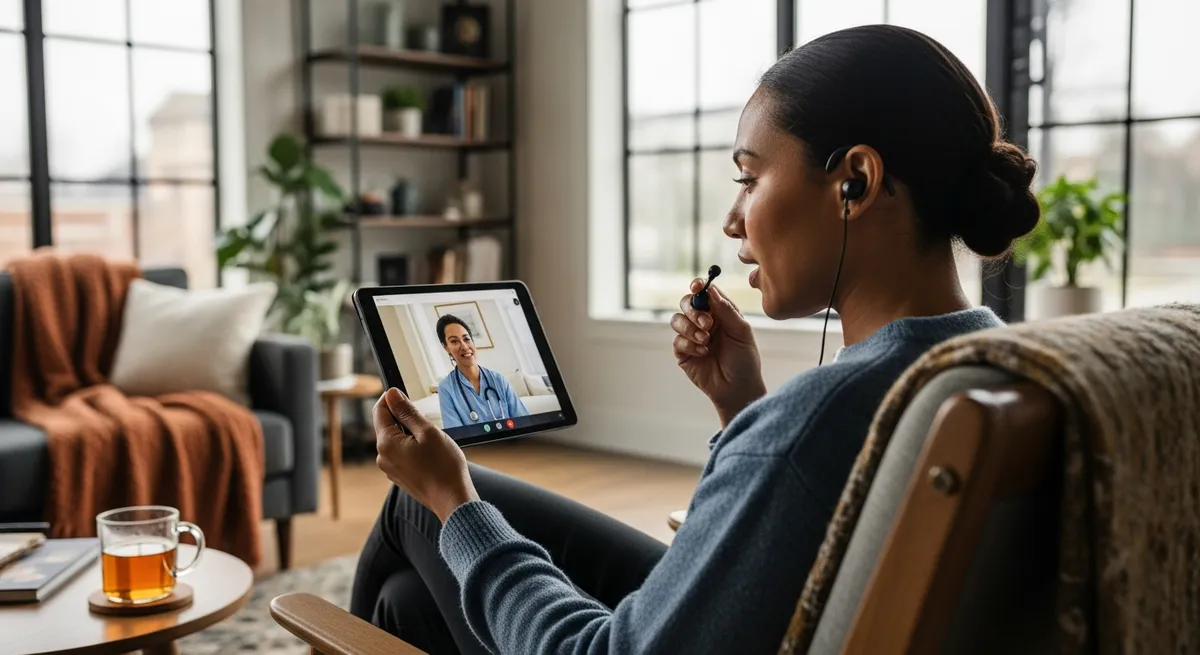
If a product claims to be for women, I want to see the specific physiological research that justifies the label beyond a pink coating. Most of the time, that research does not exist. Use applications that offer local storage options where the data never leaves your phone. If an app does not have a clear, concise privacy policy that explicitly states they do not sell your data, delete it. Your menstrual cycle is not a product to be sold, and your health history should not be a line item on the spreadsheet of an advertiser. Most importantly, return to the basics. If you are concerned about your health, talk to a qualified medical professional who has a degree that did not come from an app store. (My doctor, who is a very patient woman named Dr. Aris, once had to talk me down after a tracker told me my resting heart rate was that of a hibernating bear.)
Use technology as a supplement to professional care, not a replacement for it. A tracker can be a useful tool for identifying patterns, but it should be the start of a conversation with your doctor, not the final word on your health. We must stop letting algorithms dictate how we feel about our bodies. But as long as the market is dominated by unregulated wellness gadgets and predatory data harvesting, we must remain vigilant. We are not just consumers; we are patients, and we deserve better than what is currently being served in our social media feeds. The next time you see an advertisement promising to hack your hormones, do yourself a favor: put the device down and go for a walk instead. It is significantly cheaper, and the privacy policy is much better.
The Bottom Line
The rise of FemTech is a double-edged sword that requires a sharp eye and a healthy dose of skepticism. It is wonderful that women's health is finally receiving the investment it deserves, but we must ensure that investment is directed toward genuine medical progress rather than just aesthetic marketing. (My kitchen drawer, which is currently a graveyard of abandoned fitness trackers, serves as a rattling testament to my own expensive failures.) True health is not found in an app; it is found in the slow, often unglamorous work of self-care and professional medical guidance. We are more than our data points. It is time we started demanding that the technology we use reflects our complexity, rather than just our anxieties. Be careful what you track, and even more careful about who you trust with the results.
Myth vs. Fact
Myth: All health tracking apps are HIPAA compliant and protect your privacy by law.
Fact: Most consumer health apps do not fall under HIPAA regulations, meaning they can share your data with advertisers and third parties legally.
Key Takeaways
Frequently Asked Questions
❓ Are period tracking apps safe to use for health monitoring?
Most of these applications use simple algorithms that can be easily thrown off by stress, illness, or travel. They are not a substitute for clinical diagnostics. What is more, your data is often not as private as you might think. If you choose to use one, ensure it has a robust privacy policy and consider using a pseudonym to protect your identity. (I once used the name 'Gladys' for a fitness app, and it was the most peaceful month of my digital life.)
❓ Why is my health data not protected by HIPAA in these apps?
HIPAA only applies to healthcare providers, insurers, and clearinghouses. Most app developers are tech companies, not medical entities. This means they are not legally required to follow the same privacy standards. It is a massive regulatory gap that users must navigate themselves with extreme caution. (The fine print is where your rights go to die.)
❓ What should I look for before buying a FemTech wearable?
This depends on your goal, but you should always start by checking if the company has published any peer-reviewed research in reputable journals. (A shiny website with glowing testimonials is not the same thing as a clinical trial.) Look for devices that have sought some level of FDA clearance if they are making specific health claims. Also, consider the total cost of ownership, including monthly subscriptions. Often, the device is just a gateway to a never-ending series of subscription payments for data you already own.
❓ Can supplements really balance my hormones?
The clinical reality is that balancing hormones is a marketing phrase rather than a medical strategy. Hormones are incredibly complex and exist in a delicate, shifting state of equilibrium. Taking an unregulated supplement based on an app's recommendation can actually cause more harm than good by masking underlying issues or interfering with other medications. You should always consult with an endocrinologist before starting any regimen that claims to alter your hormonal chemistry.
❓ Is the data from FemTech apps used in medical research?
It can be, but there is a significant catch: the data is often sold to researchers as a proprietary dataset. While this can contribute to large-scale studies, it also means your personal health information is being treated as a corporate asset rather than a patient record. If you want to contribute to medical science, consider participating in a formal clinical trial at a university or research hospital. Those environments have much stricter ethical guidelines and data protections than a venture-backed startup in a glass office.
References
Disclaimer: This article is for informational purposes only and does not constitute medical, legal, or professional advice. The wellness technologies and marketing practices discussed are unregulated and should not be used as a substitute for professional clinical diagnosis or treatment. Always consult with a qualified healthcare provider regarding any health concerns or before starting a new supplement or monitoring routine.