
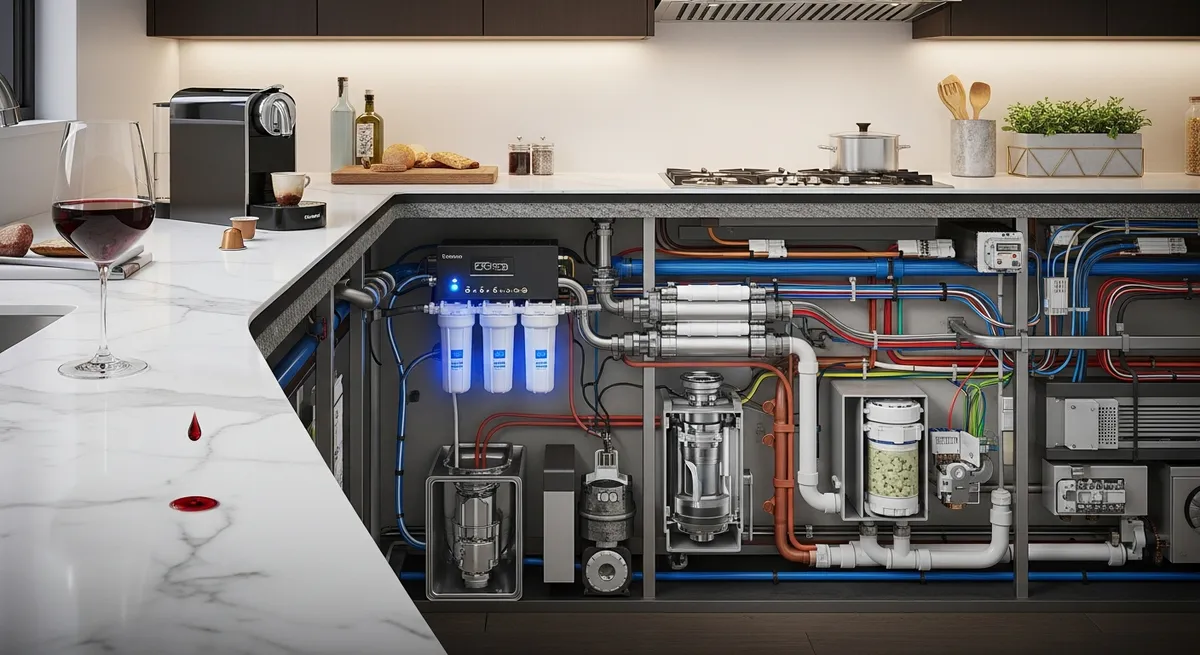
Everyone loves a white marble countertop. Until they spill red wine on it. (Panic mode: activated.) But here’s the thing nobody tells you on HGTV. A pretty kitchen that doesn’t work is just a sculpture you stand inside. I’ve seen it a hundred times - homeowners blowing $50k on cabinets while their dishwasher sounds like a jet engine taking off. It’s painful to watch. Actually, it’s worse than painful; it’s a financial mistake. Because when you go to sell? Buyers notice if the water pressure is weak way before they notice your hand-painted backsplash. So let’s talk about the ugly, boring, un-sexy upgrades that actually make your life better. And - more importantly - make your house worth more.
The "Lipstick on a Pig" Problem
You put a pot on to boil. Then you wait. And wait. Ten minutes later? Still lukewarm bubbles. That’s the reality for half the kitchens I see.
They look gorgeous. Seriously, Pinterest-worthy. But functionally? They’re disasters. The layout forces you to walk a marathon just to make a sandwich, or the electrical panel screams for mercy every time you run the microwave. The Remodeling Impact Report from the National Association of Realtors and NARI consistently shows functional upgrades recovering more cash at resale than cosmetic ones. Which sounds boring, I know. But it pays.
Let's break the logic down:
Picture this scenario. You turn on the high-speed blender. Then you push down the toaster lever. Pop. Silence. Darkness. If your "gourmet" kitchen trips a breaker when you run the blender and the toaster at the same time? Then it isn't a kitchen. It is a fire hazard that happens to have nice brass handles.
A working kitchen beats a pretty one. Every single time. If your upgrade doesn't hit one of these three specific targets, it’s basically just a toy:
- Speed: Does it make cooking faster?
- Safety: Does it keep you from burning the house down?
- Efficiency: Does it lower the bills?
Most aesthetic upgrades fail all three. (Sorry, but subway tile doesn't cook dinner.)
The "Silent Value" Stats
Buyers and appraisers increasingly reward efficiency. Homes with documented energy-efficient systems typically sell at a modest premium over comparable homes, and on a half-million-dollar house even a small percentage is real cash. Just for systems that don't burn energy. I will take that check any day.
3 Boring Upgrades That Actually Move the Needle
So, if we aren't buying marble, what are we buying? Here is the stuff that actually improves your life (and your home's value) without costing a fortune.
1. Induction (The Tech You Hate But Shouldn't)
I know. I hear it constantly. "I need gas. I need the flame." Fire is primal. Fire feels like cooking. But here is the hard truth about gas: it is inefficient, messy, and terrible for indoor air quality. Induction isn't the electric coil stove your grandma had in 1990. That thing was a tragedy.
Modern induction uses magnetic fields. (Science!) It heats the pan, not the glass. That means two things:
- Speed: It boils water in 90 seconds flat. No joke. It is shockingly fast.
- Cleanup: You can wipe the surface while you cook because the glass itself doesn't get hot enough to burn the rag.
The downside? You might need new pans. If the magnet falls off? The pan is useless. But for the efficiency boost? It is worth the hassle.
Beyond the speed, there is a "future-proofing" aspect here. With more municipalities looking to ban new natural gas hookups, an induction line (which requires a specific 240-volt outlet) makes your home compliant with future codes. Buyers are starting to ask about this. They don't want to buy a house they have to retrofit in five years. Installing the heavy-duty wiring now is a stealth upgrade that pays off at the closing table.
2. Smart Water (The Un-Sexy Cash Saver)
It’s not exciting. Your guests won't ooh and aah over it at a dinner party. "Hey everyone, check out my flow rate!" said nobody. Ever.
But swapping your plumbing fixtures for high-efficiency models saves thousands of gallons a year. And I am not talking about those miserable low-flow showerheads from the 90s (the Seinfeld ones) that barely mist you. Modern aerators mix air into the stream, so the pressure actually feels stronger while using significantly less water. The EPA's WaterSense program estimates that swapping old faucets and aerators for labeled models saves the average family about $250 over the fixtures' lifetime.
Another invisible upgrade? A hot water recirculation pump. You know how you normally turn the tap on and wait 45 seconds for the water to get hot? That is 45 seconds of water going straight down the drain. A recirculation pump keeps hot water instantly available at the tap. It costs about $300 - $500. When a buyer turns on the sink and steam comes out instantly? That feels like luxury.
Plus, install an under-sink filtration system. It costs maybe $200. But telling a potential buyer, "This tap serves filtered water," is a massive flex. It signals that the house is well-maintained. And homes that look cared for get higher offers. End of story.
3. Lighting That Actually Lets You See
Most kitchens have a single, sad ceiling light. You stand at the counter, your body blocks the light, and you're chopping onions in your own shadow. Dangerous? Yes. Annoying? Absolutely.
The Fix: Under-cabinet LED strips.
They cost peanuts. You can stick them on yourself in an afternoon. But the effect? It layers the light. It makes the counters gleam. It opens up the visual space. And - critically - it stops you from needing stitches because you couldn't see the knife blade.
Be careful with the "temperature" of the light, though. This is where people mess up. Do not buy "Daylight" (5000K) bulbs unless you want your kitchen to look like a hospital operating room. It's sterile and cold. You want 3000K (Warm White) or 3500K (Bright White). And check the CRI (Color Rendering Index). If you buy cheap LEDs with low CRI (under 90), your food will look grey and unappetizing. High CRI LEDs make that tomato sauce look red and vibrant. It is a subconscious psychological trick, but it works.
The Math: Why Practicality Wins
Let's look at the numbers. I broke this down because the price difference is... well, it borders on offensive when you see it on paper.
| The Upgrade | Approx. Cost | Daily Impact | ROI Factor |
|---|---|---|---|
| Quartz Countertops | $3k - $5k (varies) | Looks nice. Stains less. | Medium (It's expected now) |
| Dedicated Circuitry | $500 - $1k (labor heavy) | Zero tripped breakers. | High (Inspection pass) |
| Induction Cooktop | $1,200 - $2,000 | Boils water 50% faster. | High (Energy savings) |
| Designer Backsplash | $1,500+ | Zero. Literally zero. | Low (Taste subjective) |
See the issue? The backsplash costs more than the dedicated circuitry but does nothing for the house's mechanics. When an inspector comes through, they won't care about the tile. They will care if the GFCI outlets are wired backward or if the breaker panel is double-tapped. Fixing the boring stuff eliminates friction during the sale process. Friction kills deals.
Action Plan: Stop Bleeding Cash
Okay, so you want to fix this. Where do you start? Please, do not just drive to the big box store and start throwing boxes in a cart. That is exactly how you end up with a $300 faucet that doesn't fit the hole pattern in your sink. (I have done this. It sucks.)
Step 1: Audit the Power.
Before you buy a wolf range or a fancy fridge, check your panel. If you only have 100 amps coming into the house, you might need a service upgrade first. It’s boring, expensive, and invisible. Do it anyway.
Step 2: Light the Corners.
Go buy a cheap LED strip kit. Test it. See how much better the room looks when the corners aren't dark caves of despair.
Step 3: Fix the Flow.
If your faucet drips, fix it. A dripping faucet is the universal sign of "I don't take care of this house." Buyers smell that fear. Fix the leak.
Step 4: The Triangle Check.
Before you spend a dime on cabinets, map out your "Work Triangle" (the path between stove, sink, and fridge). If your island cuts right through that path, you have a broken kitchen. No amount of marble will fix a bad layout. Sometimes the best upgrade is moving the fridge six inches to the left.
FAQ: Real Talk
Q: Is induction actually safe?
A: Safer than gas, yeah. No open flame. No gas leaks. And the surface cools down ridiculously fast. If you have kids (or cats that treat the counter like a jungle gym), that safety factor is the whole pitch.
Q: Can I DIY the electrical stuff?
A: No. Hard pass. Change a light fixture? Sure. Run a new 240v circuit? Call a pro. Saving $200 isn't worth a hospital visit. Seriously.
Q: Do smart appliances really add value?
A: It depends on the "smart." A fridge with a giant touchscreen? No. That tech will be dead in three years. But a smart thermostat or a wifi-enabled leak detector? Yes. Focus on "Smart Efficiency," not "Smart Toys."
Q: Why does everyone push white kitchens if they are so hard to clean?
A: Because they photograph well. That’s it. That’s the entire reason. If you actually cook with turmeric or curry? White is... well, it's a brave choice. Go for grey or navy if you value your sanity.
Q: Is a pot filler worth it?
A: Honestly? Usually no. It looks fancy, but you still have to carry the boiling water to the sink to drain it. Unless you cook pasta for twelve people every night, it's mostly plumbing jewelry. Spend that money on a better faucet instead.
Disclaimer: This article is for informational purposes only and does not constitute professional financial, construction, or real estate advice. Consult a certified contractor or financial advisor before making major home improvements.


