
I was standing in my kitchen at six in the morning, white-knuckling a cup of lukewarm water spiked with lemon and Himalayan pink salt, while glaring at a glowing rectangle that had the audacity to tell me my sleep was suboptimal. (I already knew this because my eyes felt like they had been rubbed with sandpaper, but the application really enjoyed highlighting my failures.) My neighbor - let us call her Brenda, a woman who possesses more discipline than sense - was currently thumping past my window in a weighted vest. Brenda does this because she heard a baritone podcast host claim that fasted cardio is the only path to human excellence. I felt like a monumental failure. I was exhausted, my joints ached with every movement, and the mere thought of a high-intensity interval training session made me want to weep into my bowl of organic kale. (I have been there, believe me, and the kale offers zero emotional support when you are having a breakdown.)
The Great Research Gap
Here is the fundamental problem that nobody in the fitness industry wants to admit. Most of the health advice we consume like gospel is not designed for anyone who possesses a fluctuating hormonal cycle. It is designed for men. For several decades, medical researchers treated women as if they were simply smaller men with more complicated internal machinery. It is a staggering fact that the NIH Revitalization Act of 1993 was the first time women were legally required to be included in clinical trials funded by the National Institutes of Health. Think about that specific date. 1993. I have a collection of flannel shirts in my closet that are older than that policy. (They are very comfortable shirts, and I refuse to donate them despite what my sister says.) Because of this massive historical delay, the vast majority of data regarding intermittent fasting and cold plunges is extrapolated from male subjects. It is a technological mismatch of the highest order. It is like trying to play a vintage vinyl record using a high-powered industrial laser. It does not work. It just creates a lot of expensive noise.
That historical gap has created a world where medical advice is often a one-size-fits-all garment that fits nobody properly. My own doctor once told me that my chronic fatigue was likely just \"the price of being a modern woman.\" (I nearly threw my designer handbag at him, but it was a gift to myself for a promotion I worked too hard for.) We have been left out of the conversation for so long that we have started to believe our own biology is a flaw rather than a feature. This is not just a minor oversight. It is a systemic pitfall that keeps millions of women running on a treadmill that was never built for their stride.
The Infradian Rhythm vs. The Clock
Men operate on a predictable twenty-four-hour circadian rhythm. It is simple. It is linear. It is remarkably easy to track. However, if you possess a female reproductive system, you are navigating a much more sophisticated thirty-day physiological symphony known as the infradian rhythm. This secondary clock affects your metabolism, your brain chemistry, and even your response to external stress. When a man skips breakfast, his body typically responds with a predictable cortisol spike that his system is equipped to handle. But when a woman skips her morning meal, especially during her luteal phase, her body might interpret that lack of glucose as a terrifying sign of impending famine. (I once attempted a strict three-day fast because a Silicon Valley executive swore it would grant me mental clarity, and I spent the entire third day unable to remember my own zip code.)
This physiological reaction sets off a domino effect of stress hormones which may effectively deactivate non-essential biological processes such as ovulation or thyroid maintenance. It is not peak performance. It is a full-blown biological emergency. We are culturally conditioned to be the exact same person every single morning of the month. We are expected to maintain the same energy levels, the same appetite, and the same level of sociability regardless of where we are in our cycle. But your body is not a flat line. It is a wave. Some weeks you are a powerhouse. Other weeks, you genuinely need to stay in bed and consume an entire loaf of sourdough. (My dentist, who frankly scares me with his intensity, calls this \"listening to your body,\" but I prefer to call it basic survival.) Published research suggests that female athletic performance can vary significantly across the cycle, yet we continue to push through the agony. Why? Because Brenda is still running. Because the man on the podcast said we should be disciplined. It is exhausting. It is also entirely unnecessary.
The Case of Sarah and the Two-Thousand-Dollar Ring
My friend Sarah is a classic example of this biological dissonance. She is a high-powered attorney who handles complex mergers, yet she cannot handle a skipped meal without turning into a different person. She spent two thousand dollars on a specialized smart ring and a professional-grade cold-plunge tub, fully convinced that she could hack her way to eternal productivity. By the third month of her new "optimized" lifestyle, her hair began thinning and she had not had a menstrual period in ninety days. (She was not pregnant; she was just biologically terrified because her body thought it was living through a war zone.) This is the price of ignoring the infradian rhythm. Sarah was trying to force her body into a linear box that it was never meant to inhabit. (She eventually sold the tub on a popular auction site for half what she paid, which I found deeply satisfying.)
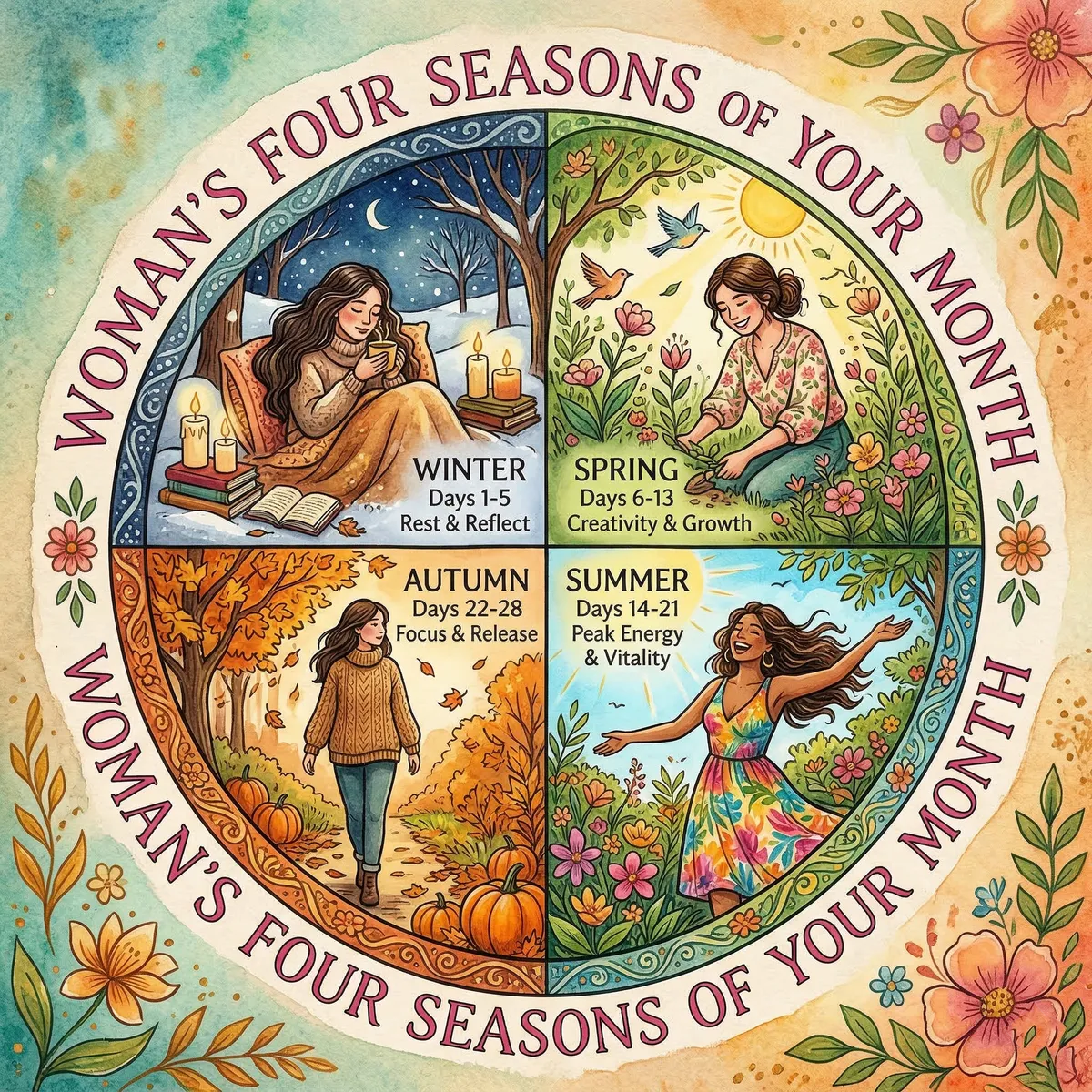
Navigating the Four Seasons of Your Month
You must understand that the follicular phase, which begins right after your period ends, is essentially your internal springtime. Your estrogen is rising, and your brain is uniquely primed for learning new skills and launching fresh projects. Research suggests that during this specific window, your insulin sensitivity is at its peak. This means your body handles carbohydrates with much more efficiency than it does later in the month. (These metabolic shifts are not optional; they are part of your physiology.) This is the ideal time to schedule those difficult board meetings and try that grueling new workout class you saw on social media.
During ovulation, both estrogen and testosterone reach their peak. This often makes you feel more outgoing and capable of clear communication. If you have to give a high-stakes presentation or go on a first date with that guy from the gym, this is your optimal window. Then comes the luteal phase, and the metaphorical party comes to a grinding halt. Progesterone takes the lead. Its primary responsibility is to prepare your body for a potential pregnancy. This requires a significant amount of energy. This means you actually need more calories. If you continue to fast or restrict your intake during the luteal phase, you are effectively starving a body that is currently working overtime. (This is why you feel "hangry" and why your patience for Brenda and her weighted-vest stories is at an all-time low.) Your body is also more susceptible to inflammation and physical injury during this time, so those heavy deadlifts might actually do more harm than good. You are not being lazy. You are being biological.
Stop Fighting the Wave
I eventually stopped trying to keep up with Brenda. I stopped the aggressive fasted cardio when my legs felt like they were made of lead. I started eating actual food in the morning. (Imagine that! Consuming calories when you are hungry!) My energy levels stabilized almost immediately. My brain came back online. The science is finally beginning to catch up to the reality of the female experience, but the culture is still lagging behind. We need to stop treating our bodies like machines that need to be optimized and start treating them like ecosystems that need to be tended with care. If you feel like your current routine is slowly killing you, it probably is. And that is not your fault. It is the faulty data. It is the history of exclusion. It is the weighted vest. Throw it off. (Metaphorically, of course, because those things are expensive and you should probably just sell it on the internet.)
Did You Know?
Researchers in women's health point out that female cells and male cells respond differently to stress and medication at a cellular level, yet gender-specific dosing for most common medications is still not the industry standard in modern medicine.
How to Honor Your Rhythm
So, how do you actually implement this knowledge without moving into a cave or quitting your job? (Although some days, a cave sounds quite lovely, provided it has high-speed internet and a heated blanket.) You cannot manage what you do not measure, but you must measure the correct variables. You should use a tracking method that accounts for your cycle, not just your daily steps or heart rate. Look for patterns in your mood, the quality of your skin, and your general energy levels. You will likely discover that your "lazy" days happen at the exact same time every single month. Once you see the pattern, you can start to front-load your life. Schedule your high-stakes presentations and social engagements for the first two weeks of your cycle. During the second half, allow yourself the grace to decline invitations and focus on restorative work.
Stop treating food like an enemy that must be conquered and start treating it like a resource to be managed. During your follicular phase, you can focus on fresh, vibrant foods that support estrogen metabolism. When you hit the luteal phase, do not fight the natural urge for carbohydrates. Your body actually requires them to produce serotonin and manage the progesterone shift. Instead of reaching for processed sugar, go for sweet potatoes, squash, and berries. And for the love of all things holy, stop the aggressive fasting when your body is screaming for nourishment. A twelve-hour fast is usually plenty for most women; the sixteen or eighteen-hour windows favored by the "biohacking bros" can easily wreak havoc on your thyroid health and sleep quality. (I am not a doctor, but I have seen enough thyroid panels to know that a morning bagel is cheaper than a specialist visit.)
Finally, rethink your relationship with physical exercise. The CDC recommends 150 minutes of moderate activity per week, but those guidelines do not specify that those minutes must look identical every single day. If you feel like a beast in the gym during week one, you should go for it. Lift the heavy things. But when week three rolls around and your body feels heavy, you should switch to walking, swimming, or restorative yoga. You are not "losing progress" by doing this. In fact, by reducing cortisol during your luteal phase, you are actually making it easier for your body to build muscle and burn fat when the time is right. True health is not a frantic sprint; it is a rhythmic dance. When you finally learn the steps, everything becomes infinitely easier.
The Bottom Line
The transition from "hacking" your body to "honoring" your body is the most profound shift you can make for your sanity. We have been conditioned to believe that our cycles are a weakness or a messy complication that gets in the way of a linear, masculine model of success. In reality, your infradian rhythm is a built-in feedback loop that tells you exactly what you need to thrive. It is a guide for when to push, when to play, and when to rest. When you stop fighting your biology, you stop fighting yourself. The fatigue lifts, the brain fog clears, and you finally stop feeling like a broken version of a man. (And frankly, being a woman is much more interesting anyway.) You need to pay attention. You need to listen to the subtle cues your body is giving you every day. Biohacking for women is not about trying to override nature; it is about finally choosing to join the conversation with your own physiology. The insights you gain from that simple act of attention will be more valuable than any podcast advice you could ever find. You are a masterpiece of biological engineering; it is time you started treating yourself like one.
Key Takeaways
Frequently Asked Questions
❓ What is the infradian rhythm and why does it matter?
The infradian rhythm is a biological cycle that lasts longer than twenty-four hours, specifically referring to the menstrual cycle in women. It is a secondary internal clock that influences metabolism, brain chemistry, and the immune system, making a standard twenty-four-hour routine insufficient for female biology. While the circadian rhythm manages your daily sleep-wake cycle, the infradian rhythm governs your physiological shifts over a month. This means your nutritional and physical needs change significantly throughout that period. Ignoring this rhythm often leads to hormonal chaos because the body is forced to operate against its natural programming. When you align your lifestyle with this clock, you can experience improved energy and reduced symptoms of hormonal imbalance. It is not a secondary system; for women of reproductive age, it is a primary driver of overall health and well-being. (My neighbor Brenda has yet to acknowledge this, but her weighted vest is starting to look very heavy.)
❓ Is intermittent fasting safe for women?
While many men thrive on strict fasting protocols, women often experience significant hormonal disruption if they fast too aggressively, especially during the luteal phase of their cycle. Research suggests that excessive caloric restriction can trigger a stress response in the female body, potentially leading to menstrual irregularities or sleep disturbances. The female brain is highly sensitive to nutrient availability, and long periods without food can send a "starvation" signal to the hypothalamus, which then downregulates reproductive hormones. If you choose to fast, it is generally safer to stick to a twelve-hour window and avoid fasting entirely during the week before your period. This approach allows for the benefits of digestive rest without the catastrophic hormonal fallout. Every body is different, but for most women, a "gentle" approach to fasting is far more effective for long-term health than the extreme protocols often discussed in biohacking circles. (I personally find that a breakfast of eggs and avocado prevents me from wanting to fight everyone in the grocery store.)
❓ How should I adjust my exercise routine throughout the month?
During the follicular and ovulatory phases, your body is generally better equipped for high-intensity interval training and heavy lifting. Estrogen provides a natural boost in energy and recovery capacity, making this the ideal time to push your limits. However, as you enter the luteal phase, increasing levels of progesterone make the body more prone to injury and stress. This suggests a shift toward lower-impact activities like yoga or walking. Progesterone also raises your core body temperature, which can make intense cardio feel much more taxing and less enjoyable. Working against these shifts can lead to elevated cortisol levels, which actually hinders muscle growth and fat loss in the long run. By periodizing your workouts to match your cycle, you are maximizing the effectiveness of your effort. It is about training smarter, not just harder. (I have started doing pilates during my luteal phase, and I no longer feel like I am dying every Tuesday.)
❓ What foods help support hormonal balance during the luteal phase?
During the luteal phase, the body requires more complex carbohydrates and healthy fats to manage blood sugar fluctuations and support progesterone production. Incorporating root vegetables, leafy greens, and magnesium-rich foods like dark chocolate can help alleviate common symptoms of premenstrual syndrome. Progesterone causes your blood sugar to be more volatile, so eating consistent, balanced meals becomes much more important than it was earlier in the month. This is the time to prioritize comfort foods that are nutrient-dense, such as stews, roasted vegetables, and brown rice. Skipping carbohydrates during this phase can lead to intense cravings and irritability because your brain needs them to produce serotonin. By giving your body what it actually needs, you can significantly reduce the emotional rollercoaster that many women assume is just an inevitable part of being female. (I consider dark chocolate a medicinal necessity during this week.)
❓ Can biohacking improve my productivity at work?
Yes, by aligning cognitively demanding tasks with the follicular and ovulatory phases, when estrogen levels are higher and verbal communication skills peak, women can maximize their professional output. Saving administrative or reflective work for the menstrual phase allows for a natural biological lull without causing burnout. In the first half of your cycle, you are often more collaborative and better at problem-solving, making it the ideal time for brainstorms and new launches. In the second half, particularly the late luteal phase, you may find that you are more detail-oriented and focused on completion. This is a great time to tackle that backlog of emails or organize your digital files. When you stop trying to be the same productive person every day, you actually become more effective overall. It is the difference between swimming with the current or struggling against it. (I now schedule my major client calls for week two, and my success rate has noticeably improved.)
Disclaimer: This article is for informational purposes only and does not constitute professional medical advice. The content is not intended to be a substitute for professional medical diagnosis or treatment. Always seek the advice of your physician or another qualified health provider with any questions you may have regarding a medical condition. Never disregard professional medical advice or delay in seeking it because of something you have read in this article.


