
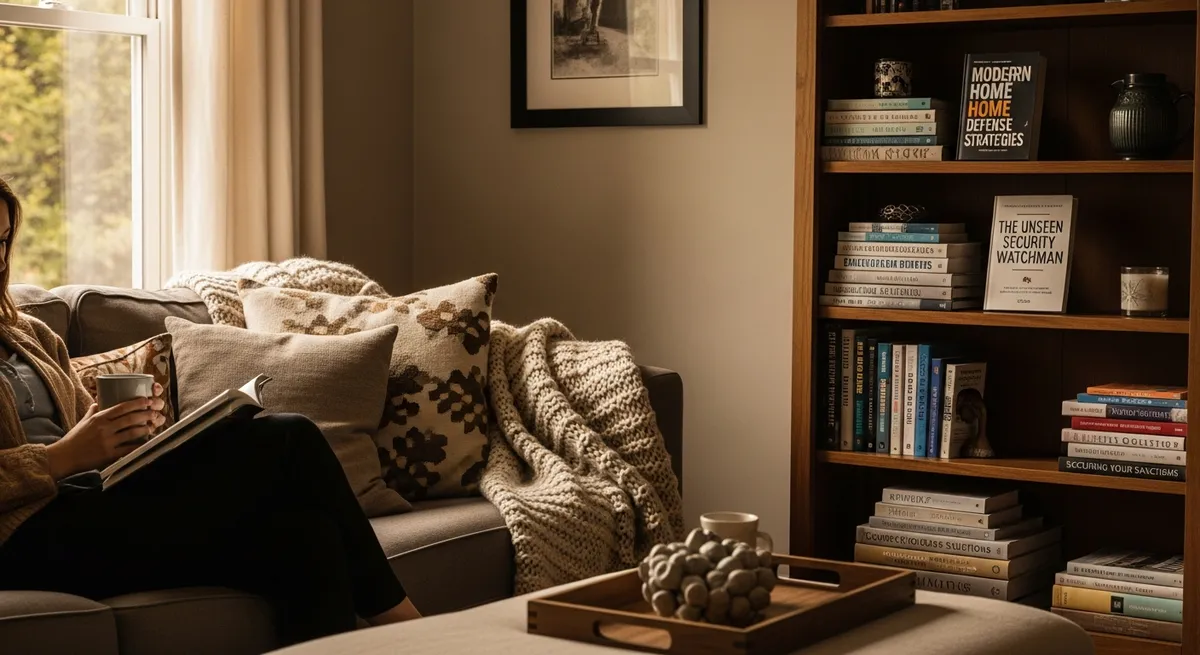
Exploring home security tips 2026 can help homeowners better understand how to prevent burglary home incidents through practical and strategic measures. Many properties rely on basic locks, yet modern security approaches emphasize layered protection and behavioral deterrence. Evaluating best home defense systems involves considering visibility, response time, and overall system reliability rather than relying on a single solution. Small adjustments in lighting, access points, and monitoring systems can significantly improve household safety. Read the guide below to review key strategies and improvements.
Stop Thinking Like a Victim (Think Like a Lazy Thief)
Here is the ugly truth about home security. You don't need Fort Knox. Forget the Hollywood nonsense regarding lasers in the hallway. Your job is simple: be a bigger headache to rob than your neighbor. (Sorry, Dave.)
Security isn't about perfection. It's about hassle. Friction. Making someone look at your porch and think, "Nah, too much work." We get this wrong constantly. We buy the fancy Wi-Fi cameras (the ones that lag), we obsess over the back door, and we totally ignore the one thing that actually stops the breach. It's backwards. To fix it, you have to get into the head of the person trying to get in.
Think about the "Pattern of Life." Burglars watch. They know when the UPS truck comes. They know when you leave for the gym. The biggest mistake homeowners make is unpredictability - or rather, the lack of it. If you leave at 8:05 AM every single day, you are broadcasting a "safe window" to anyone paying attention.
The "10 AM" Rule
Let's bust a movie myth right now. Real burglars aren't ninjas. You won't see them wearing balaclavas or rappelling down chimneys at midnight (unless they're on meth, maybe). Usually? It's just a guy in a high-vis vest holding a clipboard, walking up the driveway at noon on a Tuesday like he owns the deed.
Why? Simple. You are at the office. The kids are at school. The neighborhood is a ghost town. It's the perfect cover. If a neighbor sees someone fixing a fuse box or carrying a clipboard, they don't call the cops. They assume it's utility work. It's social camouflage, and it works terrifyingly well.
The FBI data - which is actually kinda fascinating if you can get past the fear factor - backs this up. Most hits happen between 10 AM and 3 PM. Lunchtime. They want the path of least resistance. The plan is simple: kick in the jamb, grab the console, dump the jewelry box, and vanish in under ten minutes. That's the clock you are playing against.
If you have a dog barking its head off? They leave. If a camera clearly spots them? They leave. If nothing happens? Well. You know. And remember, most of these guys aren't masterminds. They are opportunists looking for cash or electronics they can flip fast at a pawn shop. Don't give them the opportunity.
The "Onion" Strategy (Stick With Me)
Okay, bear with me on the metaphor - security is an onion. Layers. You need layers. If one layer fails (like your lock), the next one (the alarm) needs to scream.
Most people rely on a single layer: the deadbolt. And honestly? Deadbolts are a joke to anyone with a crowbar and bad intentions. You need a system that reacts. You need redundancy. If the Wi-Fi goes down, does your camera still record? If the power is cut, does the siren still wail? If the answer is no, you have a single point of failure. And Murphy's Law says that point will fail exactly when you need it not to.
Layer 1: The Mind Games (Deterrence)
Stop them before they even touch the handle. Light. Noise. Signs. See a security sticker? Most thieves walk. Interviews with convicted burglars back this up. Is it a guarantee? No. But it puts doubt in their mind. Another often overlooked deterrent? Landscaping. Seriously. Plant thorny bushes (holly or roses) under your ground-floor windows. It sounds medieval, but nobody wants to shred their legs climbing through a window when they could just kick a door. It's a physical and psychological barrier.
Layer 2: The Detection (The Electronic Watchdog)
This is the best home defense money can buy - a monitored system. Not just a camera that records you getting robbed (which is depressing), but a sensor that trips a siren. You want to shrink that "10-minute window" down to zero. The psychological impact of a 100-decibel siren cannot be overstated. It induces panic. It turns a "search and seize" mission into a "run for your life" situation. Panic leads to mistakes, and mistakes lead to them leaving empty-handed.
Let's Talk Money (Real Costs)
Let's look at the numbers. Because you can spend $50 or $5,000, and sometimes the cheaper option is... well, cheap for a reason. There is a massive hidden cost to DIY systems: your time and your attention span.
See the difference? A DIY camera is a passive observer. A monitored system is an active participant. That's what you are paying for. With a DIY setup, if you are in a meeting, on a plane, or just asleep, your house is vulnerable. A monitored system doesn't sleep. It doesn't take vacations. It doesn't put its phone on "Do Not Disturb." That peace of mind is the actual product.
The Solution: Get A System That "Talks Back"
If you are looking at home security systems, don't just look at the price tag. Look at the response time. Speed is the only metric that matters when glass breaks.
The best systems today - like the top-tier packages from providers like Vivint or ADT - don't just beep. They talk. Some cameras literally possess a speaker that says "You are being recorded" when someone steps on your lawn. (Creepy? A little. Effective? Absolutely.) It forces the intruder to acknowledge they have been seen. It breaks their anonymity immediately.
When you compare the burglar alarm cost against the cost of replacing everything you own (plus the trauma, which you can't put a price on), the monthly fee starts to look like a rounding error. You want a system that includes:
- Glass Break Sensors: Because they won't always open the door.
- Cellular Backup: So cutting the phone line does nothing.
- Mobile App Control: So you can arm it when you forget. (And you will forget.)
This is the gold standard. It takes the pressure off you to be the guard dog. It lets you go back to just being a homeowner.
Action Plan: Tighten the Perimeter Today
You don't have to buy a full system this second. But you need to do something. Inertia is the enemy here.
Start with the lights. Motion-sensor lights are dirt cheap. And criminals? They absolutely hate them. Think of roaches scattering when you flip the kitchen switch. Same instinct. Install them over the driveway and the backyard.
Then, check your strike plates. Go look at your front door frame. See that metal plate the deadbolt slides into? It's probably held in by tiny half-inch screws. One good kick, and the wood splits. Replace those screws with 3-inch ones that bite into the stud. Cost? About $2. Effectiveness? Massive.
And here is one nobody talks about: the sliding glass door. It is the weakest point in most homes. The factory locks are garbage - you can pop them with a screwdriver. Go to the hardware store and buy a "security bar" or even just cut a dowel rod to fit in the track. It prevents the door from sliding even if the lock is picked. It costs five bucks and makes the door nearly impossible to open quietly.
Finally, shop around. Look for the best home defense packages that fit your layout. Don't just buy what your neighbor has. Your house is different.
FAQ: The Stuff Nobody Asks (But Should)
Do "Fake" Cameras Work?
Short answer? Sometimes. Long answer? Just... don't. Experienced pros spot fakes from the sidewalk. (The giveaway is that blinking red light - real gear doesn't do that.) Honestly? Having nothing is safer than a fake sense of security. If they realize the camera is fake, they assume the rest of your security is a bluff too.
Is a Dog Enough?
I love dogs. Big fan. But unless that dog is professionally trained for protection (which is pricey), your Golden Retriever is likely just going to ask for belly rubs. A barking dog helps. Sure. But it's not a security system. It can be bribed with a steak. Relying solely on Fido is a strategy that fails as soon as the intruder brings treats.
Can I Just Use Wi-Fi Bulbs?
You can - and you should - put lights on timers. But the old "leave the TV on" trick? Thieves know that one. Smart lights that randomize patterns are better. Just make it look lived in. Messy, even. If the driveway is empty and the house looks perfect? That screams "Rob me." Leave a pair of muddy boots by the door. Leave a kid's bike on the lawn. Imperfection looks occupied.
What About the Master Bedroom?
This is where it gets scary. Most burglars head straight for the master bedroom. Why? That's where we keep the jewelry, cash, and guns. If you have valuables, don't keep them in the sock drawer. Get a bolted-down safe, or better yet, keep the really expensive stuff in a bank box. Don't make it easy for them.
Do I Need a Landline for Monitoring?
Not anymore. In fact, relying on a landline is risky because the first thing a pro does is cut the phone wire on the side of the house. The best modern systems use a dedicated cellular connection. It's wireless, encrypted, and can't be cut with a pair of pliers.
Disclaimer: This content is for informational purposes only and does not constitute professional security advice. Home security needs vary by location and property type. Always consult with a certified security professional before making major modifications to your home. This article may contain affiliate links, for which we may receive a commission at no extra cost to you.


