My House Is Trying To Kill Me And I Paid For The Privilege
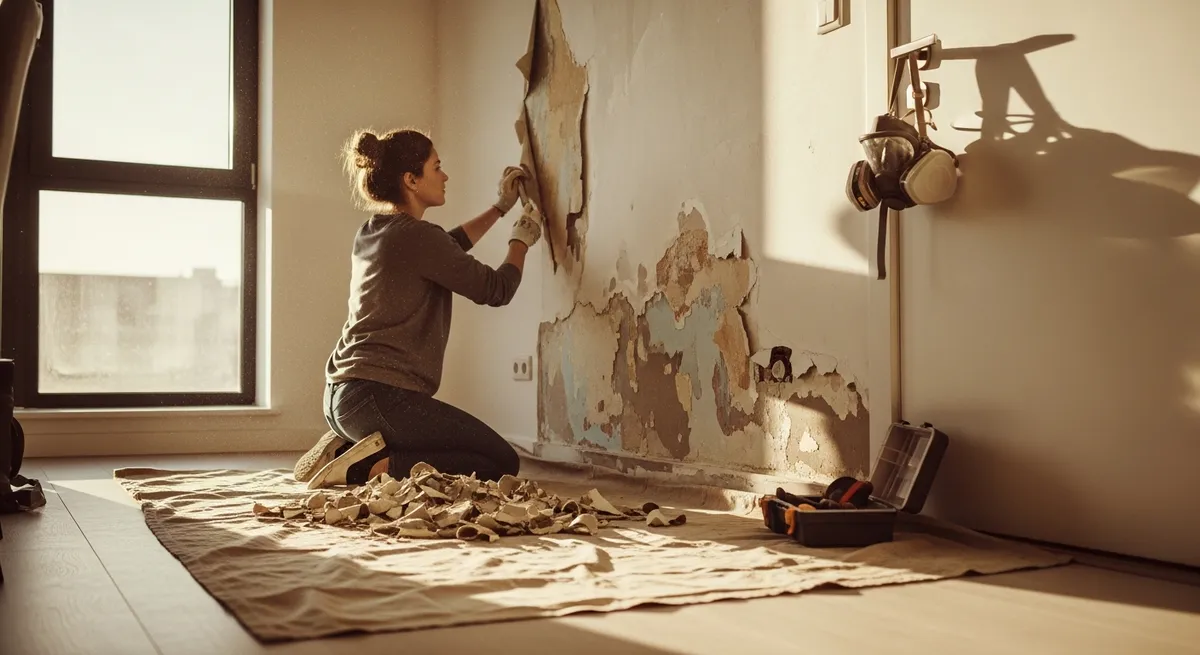
I am currently sitting in a room that smells faintly of a brand new shower curtain. (It is not a pleasant scent; it is the olfactory equivalent of my endocrine system weeping into a silk pillowcase.) Last year, I hired a contractor named Dave to renovate my home office. Dave was a lovely man who wore a pencil behind his ear and promised me that the new flooring was the pinnacle of modern engineering. It turns out that modern engineering is just a polite industry euphemism for a massive, slow-motion chemistry experiment involving my lungs. I paid Dave twelve thousand dollars to turn my sanctuary into a plastic-lined gas chamber. (I am not being dramatic; I am being observant, which is much more expensive in the long run.) I often wonder what occurs within the delicate machinery of the human frame when one discovers that their sanctuary is methodically leaking synthetic vapors that treat the endocrine system like a suggestions box. I checked my bank statement after the project was finished. I cried. Then I coughed.
Most of us imagine our homes as inert structures of wood and stone. We are wrong. We have this collective delusion that our residences are solid, unmoving blocks of timber and limestone, yet the reality is that the modern dwelling is a slow-motion chemistry set. The modern residential landscape is more like a petro-chemical soup. We have spent the last sixty years perfecting the art of building efficiently. That usually means using as much petroleum-based plastic as humanly possible. My neighbor Bob recently spent three hours debating the merits of organic, grass-fed beef while standing on a laminate floor that was literally screaming formaldehyde into his nostrils. (Bob is the kind of man who buys artisanal salt but lives in a house that functions like a giant plastic storage bag.) I find it to be a rather grotesque bioethical contradiction. We obsess over the organic certification of our kale. Yet, we spend ninety percent of our lives encased in boxes of PVC and phthalates. It is absurd. Truly. We are not merely residing in architecture; we are marinating in a complex broth of industrial byproducts. It is time to have an uncomfortable conversation about the molecular structural integrity of our bedrooms and the failures of a construction industry that treats human biology as an afterthought.
The numbers are not comforting. Not even a little bit. The Environmental Protection Agency (EPA) maintains an inventory of over 80,000 chemicals. Many of these have never been fully vetted for long-term human health impacts in a bedroom or a nursery. (I checked the database, and it reads like a horror novel written by a bureaucrat.) We are told that these materials are safe because they meet regulatory standards. But that is a phrase that carries far too much weight for its own good. It is a hollow comfort. We are told the off-gassing of a single kitchen cabinet is negligible. But when you add the cabinets to the flooring, the insulation, the paint, and the sealant, you are no longer dealing with a negligible amount. You are dealing with a cumulative disaster. The EPA report on the Toxic Substances Control Act (TSCA) Chemical Substance Inventory highlights a staggering backlog of untested substances. It is a structural failure of our society. The burden of proof is currently on the consumer to prove a material is dangerous, rather than on the manufacturer to prove it is safe. (That is the definition of a bioethical failure, in case you were wondering.)
What does this actually do to a person? It is not pretty. Researchers at the National Institute of Environmental Health Sciences have noted that endocrine disruptors can interfere with nearly every hormonal process in the human body. Metabolism. Reproduction. Sleep. (I used to think my insomnia was caused by my existential dread, but it might just be the adhesive in my dry-wall.) This is not a minor inconvenience. A 2024 report from the Harvard T.H. Chan School of Public Health suggests that the chemicals in our indoor air are often ten times more concentrated than the pollution outside. Read that again. Ten times. We are literally suffocating in our own living rooms. I find that deeply insulting. When we use materials like Polyvinyl Chloride (PVC) - which is ubiquitous in pipes, flooring, and siding - we are inviting a host of phthalates into our lives. These chemicals are not chemically bound to the plastic; they migrate out over time and settle into house dust. According to the Centers for Disease Control and Prevention (CDC), most Americans have measurable levels of phthalates in their bodies. I laughed when I read that, but it was a sad, dry laugh. But what is the actual cost when you factor in the long-term healthcare implications of chronic exposure?
Let us talk about flame retardants for a moment. (I suggest you pour another glass of wine before we continue.) These chemicals are added to everything from wall insulation to sofa cushions to meet fire safety codes. However, research from the Harvard T.H. Chan School of Public Health suggests that these chemicals do not even provide significant fire protection in real-world scenarios, yet they are linked to thyroid disruption and neurodevelopmental issues. It is a staggering lack of logic. We are coating our lives in halogenated flame retardants that lead to thyroid dysfunction and cognitive decline, all for a marginal safety benefit that might not even exist. It is a corporate sin that should be punished by forcing the executives to sleep in those rooms with the windows shut. We need to embrace the concept of cradle-to-cradle design, where materials are chosen for their health throughout their entire lifecycle. If a material cannot be safely composted or infinitely recycled without releasing toxins, it probably does not belong in your bedroom. This sounds radical, but it is actually just common sense. My aunt Martha once tried to buy a mattress that did not smell like a gasoline station, and she was treated like a conspiracy theorist by the salesman. (He told her the smell was the scent of safety; she told him his tie was crooked.)
There are solutions, but they are tucked away behind jargon and massive price tags. You can buy wool insulation or hemp-based wallboard. (Denim insulation is essentially your old jeans protecting your attic, which is hilarious to me.) But these things require digging. You cannot just walk into a big-box store and find them. You have to be the annoying person who asks the manager about the molecular structural integrity of a floor plank. Most people do not have the time. I certainly did not. I just trusted Dave. (Dave is now retired in Florida, and I am here with a HEPA filter that sounds like a jet engine taking off.) It is worth noting that the alternative materials - wool, hemp, cellulose - have been around for centuries. We did not stop using them because they were inferior; we stopped using them because plastic was cheaper to manufacture and easier to ship. When I talk to people about choosing non-toxic materials, they often complain about the cost. It is twice as much for the mineral-based paint! they cry. Yes, it is. But how much does a specialized endocrinologist cost? (I am not a math expert, but the numbers do not favor the cheap paint.)
The World Health Organization (WHO) has pointed out that children are particularly vulnerable because they breathe more air per pound of body weight and spend more time on the floor where chemical dust settles. If you are building or renovating, you are not just a homeowner; you are a steward of a microscopic ecosystem. Using materials that are known to be persistent, bio-accumulative, and toxic is a breach of that stewardship. We have the technology and the materials to build homes that nourish us rather than deplete us. It is time we demanded that our living spaces reflect our values. (And maybe, just maybe, my neighbor Bob will finally listen to me about his flooring.) So, what are you supposed to do? Sell everything and move into a yurt? (I have considered it, but the lack of high-speed internet is a deal-breaker for me.) You start with the flooring and the walls. They are the primary sources of off-gassing. If you can only afford one upgrade, make it the flooring. Replace that vinyl with solid hardwood - finished with natural oils - or cork or linoleum. These materials are not just safer; they are objectively more beautiful. Even if you cannot rip out your walls, you can mitigate the damage. A high-quality HEPA filter with a significant amount of activated carbon can capture many VOCs. A cross-breeze is the cheapest health insurance you will ever buy. (I know, it sounds too simple, but the air outside is almost always cleaner than the air inside your living room.)
At the end of the day, building a healthy home is less about perfection and more about a shift in philosophy. We have been taught to prioritize the aesthetic and the financial, but the biological must take center stage if we want to thrive. It is a messy, expensive, and often confusing process to navigate the world of non-toxic construction. But the effort is worth it. You are not just building a structure; you are building a legacy of health for whoever lives in that house long after you are gone. Do not let the complexity overwhelm you. Buy a better air filter. Research your next renovation before the contractor arrives with a truck full of mystery materials. The goal is to move the needle toward safety, one choice at a time. Be the person who refuses to buy the value pack of toxic sealant. It is your home, your body, and your future. Do not let them build it out of poison. (I am going to open a window now; the shower curtain smell is starting to give me thoughts of a revolution.)
Key Takeaways
Frequently Asked Questions
❓ Are all low-VOC paints actually safe?
The short answer surprises most people because low-VOC only refers to a specific list of regulated chemicals that contribute to smog. It does not mean the paint is free of all toxins. Many low-VOC paints still contain fungicides, biocides, and other endocrine-disrupting additives that are not classified as VOCs but are certainly not great for your health. (I always look for Zero-VOC and Aromatic-Free labels, or better yet, mineral-based paints that use natural pigments.)
❓ Is vinyl flooring always a bad idea?
If you must use it, look for rigid core options that are certified phthalate-free and carry the FloorScore or Greenguard Gold certification. (However, keep in mind that the manufacturing of PVC is a disaster for the communities near the factories, which is a whole other ethical nightmare to consider.)
❓ How do I know if my insulation contains flame retardants?
Here is the thing: if it is yellow or pink fiberglass or spray foam, it almost certainly contains some form of chemical retardant. Materials like mineral wool, sheep wool, or denim insulation are naturally more fire-resistant and often require fewer chemical treatments. (Denim insulation is essentially your old jeans protecting your attic, which is a level of recycling I find deeply poetic.)
❓ Can indoor plants actually clean the air of building toxins?
I do not want to rain on your indoor jungle parade, but the NASA study that everyone cites was conducted in a tiny, sealed chamber. In a real-world house, you would need about ten plants per square foot to have a measurable impact on VOC levels. Plants are great for your mental health and they look lovely on a windowsill, but they are not a substitute for proper ventilation and avoiding toxic materials in the first place. (My spider plant is a hero, but it cannot fix a whole house full of bad flooring.)
❓ Is it worth the money to test my indoor air quality?
The short answer is yes, but only if you are prepared to do something about the results. A professional air quality test can cost several hundred dollars and will give you a detailed breakdown of formaldehyde, VOCs, and particulate matter. If you are experiencing unexplained headaches, fatigue, or respiratory issues, it is a vital diagnostic tool. (Just make sure you use an independent lab rather than a company that is also trying to sell you a five-thousand-dollar air purification system.)
Disclaimer: This article is for informational purposes only and does not constitute professional medical, architectural, or engineering advice. The health impacts of building materials can vary based on individual sensitivity and environmental factors. Always consult with a qualified professional before undertaking major renovations or making health-related decisions based on indoor air quality.