
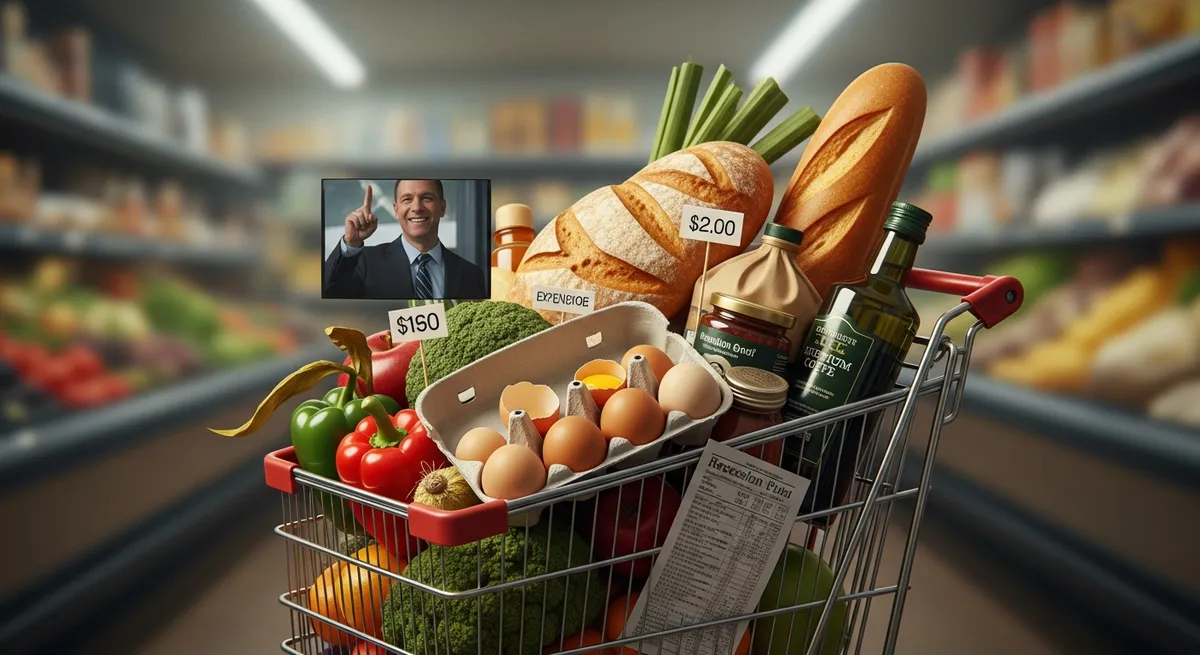
Flip on the news. Any channel. The pundits are practically throwing confetti. The stock market just hit another all-time high, and apparently - according to the suits, anyway - we are in the middle of a historic "recovery." So why does a quick Tuesday trip to the grocery store feel like a financial mugging? Why is your rent eating 50% of your paycheck if everything is so fantastic? Here is the ugly truth: the economic health indicators we use to measure success are broken. They were designed for a manufacturing world that doesn't exist anymore, not for this gig-economy reality where a number on a screen goes up while your purchasing power crashes. It creates a perverse incentive structure where disaster looks like progress on a spreadsheet. If you feel like you’re losing your mind trying to reconcile the headlines with your bank account, well - you aren't crazy. You’re just looking at the wrong numbers.
The "Party" Analogy (Or, Why You Feel Broke)
Let's ditch the jargon for a second. Forget the charts. Let me paint a picture for you.
Imagine you sell your car. Max out three credit cards. Then you drain your 401(k) to throw a massive, blowout party in your backyard. Catered food. Live band. The whole nine yards. For one night, your personal spending is skyrocketing. You look rich. You feel rich. Your neighbors think you won the lottery. But the reality? You are bankrupting your future to fund a single night of excess.
Technically? On paper? That counts as growth.
That is GDP. It measures activity, not health. If a hurricane levels a city and we spend billions fixing it, GDP goes up. Does that sound healthy? (Don't answer that.) It treats a dollar spent on cancer treatment the same as a dollar spent on a vacation. It doesn't care if the money comes from profit or crippling debt. And right now, we are measuring the speed of a Tesla using a pressure gauge from a steam engine. It just doesn't work. The signal is jammed.
This is the classic "Broken Window Fallacy" on a national scale. Economists have known about this for a century, yet we still use this flawed metric as our primary scoreboard. When the government borrows trillions to fund a stimulus package, GDP spikes. It looks like a boom. But it is really just a debt-fueled bender that you - the taxpayer - will have to pay off later. The system celebrates the "spending" (the party) while totally ignoring the hangover that is coming tomorrow. And trust me, that hangover is going to be brutal.
The Unemployment Myth
Then there is the job market. You hear the numbers - low unemployment, everyone is hiring, etc., etc. But if that is true, why does everyone I know have a side hustle just to pay for eggs? The disconnect is maddening.
The real unemployment rate is hiding in the shadows. The official number (U-3, if you want to be nerdy about it) has a massive blind spot. It only counts people actively looking for work in the last four weeks. That is a very specific, very narrow definition designed to make politicians look good.
That is it. Just four weeks.
It doesn't count the guy who applied to 500 jobs, got ghosted by AI recruiters, and finally just gave up. It doesn't count the mom who can't afford childcare - which costs as much as a mortgage now, by the way - so she stays home. They aren't "unemployed" according to the spreadsheet. They just... vanished. Poof. If the participation rate drops, the unemployment rate looks "better" even though fewer people are working. It is a magic trick. And a bad one.
We also need to talk about "underemployment." This is the silent killer of the middle class. If you lose your $80,000 a year project management job and pick up two shifts a week driving for a rideshare app to keep the lights on, the government counts you as "employed." You are a success story in their data. But your income just tanked by 70%. You lost your benefits. You lost your security. But the U-3 number doesn't capture that pain. It just sees a warm body with a gig. This shift toward the "gig economy" has totally distorted the labor stats, masking a deep rot in the quality of American jobs.
Inflation: The Silent Thief
We need to talk about the money printer. (I know, I know - economists hate when you call it that. But let's be real.)
When the Fed prints trillions to "stabilize" the market, that money has to go somewhere. Usually? It goes into assets. Stocks. Real estate. Crypto. That is great if you own those things. If you don't? You just get the bill in the form of higher prices.
This is the inflation impact on savings that nobody warns you about until it is too late. Your savings account might say "$10,000," but that $10,000 buys significantly less than it did in 2019. In a healthy economy, I pay you, you pay the butcher, the butcher pays the farmer. Money circulates on Main Street. Today? The money gets trapped in the financial casino, spinning around in high-frequency trading algorithms while regular folks put groceries on layaway.
And then there is the "Substitution Bias." This is one of the sneakiest tricks in the book. The Consumer Price Index (CPI) assumes that if steak gets too expensive, you will switch to hamburger. And because you switched, the model assumes you are equally happy, so it doesn't register the full price increase. It assumes a lower standard of living is a "choice." So, while your quality of life is plummeting because you can no longer afford the food you used to eat, the official inflation number stays low. It is gaslighting - plain and simple. (I hate that word, but honestly? Nothing else fits.)
They call it a "K-shaped recovery." I call it a split-screen disaster where half the country parties and the other half drowns. The asset owners ride the elevator up, while the wage earners take the stairs down into the basement.
So, How Do You Opt Out?
You can't fix the macro economy. (Unless you have a few trillion dollars lying around? Didn't think so.) But you can build a personal fortress to withstand the storm.
The best financial strategies right now aren't about "getting rich quick." They are about survival and defense. The rules have changed - so you need to change your playbook before the game ends.
1. Re-Evaluate Cash Holdings Cash is tricky. It provides safety, but many financial experts argue it is like melting ice during high inflation. Keeping an emergency fund is critical, of course. However, holding excess cash beyond 3-6 months of expenses often means losing purchasing power. Many investors look for assets that breathe - things like land, commodities, or essential equities that tend to track with inflation over time.
2. Ignore the "Averages" "Average" inflation is a myth. Calculate your personal inflation rate. Do you commute? Then gas prices matter more to you than the national average. Do you rent? Then housing inflation is your enemy. Track your specific expenses - don't rely on the government's basket of goods. Create your own "Personal CPI" based on what you actually buy. You might find your personal inflation rate is 15% while the news says 3%.
3. Upskill Aggressively In a gig economy, your only real security is your ability to solve expensive problems. The "company man" era is dead. Buried. If your income depends entirely on one employer's mood, you are vulnerable. Diversify your income streams like a hedge fund diversifies assets. Learn skills that are recession-resistant - trades, healthcare, specialized tech repair. Be the person who can fix the thing that nobody else understands.
FAQ: Real Answers, No Fluff
Is a recession actually coming right now?
Depends on who you ask. But here is my take: for the bottom 50% of earners, the recession never really ended. We have been in a "vibecession" for years. The technical definition doesn't matter if your bank account is bleeding. If you are broke, it is a recession.
Should I pull my money out of the market?
I am not a financial advisor (and you should barely trust the ones on TV), but panic is usually expensive. Time in the market beats timing the market - even when the market is rigged. Just make sure you aren't exposed to things that crash to zero. Diversification is your only free lunch.
Why do they keep saying it's a "soft landing"?
Because "we are going to crash the plane, but hopefully into a swamp instead of a mountain" doesn't poll well. They are managing expectations, not reality. They need you to keep spending to keep the GDP number up. Don't fall for the hype.
Why does the "official" inflation rate feel so low?
Because of how they measure it. Between "substitution bias" (assuming you switch to cheaper stuff) and "hedonic adjustments" (claiming your car costs more because it has better features, not just inflation), the numbers are smoothed out. Your wallet feels the raw price; the data shows the "adjusted" price.
What is the "Cantillon Effect"?
This is an old economic concept that explains why you feel poor while the rich get richer. Basically, when new money is printed, the people close to the printer (banks, large corporations) get it first. They buy assets at current prices. By the time that money trickles down to you in the form of wages, prices have already risen. You get the inflation; they get the wealth.
Disclaimer: This article is for informational purposes only and does not constitute financial advice. The content reflects the author's opinion. Always consult a certified financial planner before making investment decisions.


