Last Thursday, I sat on the porch with my neighbor Arthur-a man who once tried fixing a burst pipe with duct tape. (I possess a luxury sedan that is now a lawn ornament, so I cannot judge.) Arthur noted that living with a genetic ticking clock is like traversing a minefield where the path is mandatory. This is the unvarnished reality for thousands of families wrestling with mitochondrial disease. It is a gamble where the house invariably walks away with the spoils. (I avoid casinos because they take my money while serving mediocre gin.) It is a rigged fight from the start.
🔴 The Rogue Library in Your Cells
Before we can even touch the ethics of three-parent babies, you must acknowledge that your genetic blueprint is essentially a pile of unorganized laundry. The vast majority of your biological data resides in the nucleus, functioning like a prestigious, dusty library that nobody actually visits. However, a small, rebellious collection of commands exists outside those walls within the mitochondria. (My personal cellular generators appear to stage a walkout around 3:00 PM every Tuesday, which explains why I am currently staring blankly at my fourth espresso.) Data from leading mitochondrial research organizations in 2026 suggests that one in every 5,000 individuals suffers from these specific conditions. That is not a marginal figure when you consider the sheer volume of humanity you encounter during a standard trip to the post office. (I personally find the post office to be its own kind of biological hazard.)
When these microscopic engines sputter and die, the consequences are nothing short of cataclysmic. I am referring to systemic organ failure, the onset of blindness, and the slow, agonizing wasting of muscle tissue. It is a total biological breakdown. A 2026 report in the journal Nature clarifies that these mitochondrial glitches can wreak havoc on nearly every single organ system in the human frame. (I read the full report and had to lie down for twenty minutes afterward because our biological fragility is genuinely terrifying.) The biological bottleneck of mitochondrial DNA is that it is transmitted strictly through the maternal lineage. Should the mother carry a mutation, the probability of her offspring inheriting that biological flaw is extraordinarily high. There is no room for negotiation. There is no higher court of appeal.
🤔 The Scientific Hail Mary
This specific intersection is where the medical research becomes remarkably assertive. Scientists have pioneered a process known as Mitochondrial Replacement Therapy, which the tabloid press adores calling "three-parent babies" because sensationalism drives revenue. (I have spent two decades in this industry; a dull headline is a fast track to unemployment.) This specific methodology allows clinicians to harvest the immaculate nuclear DNA from parents and nestle it within a donor egg that actually possesses operational mitochondria. The end result is a healthy infant who carries the genetic blueprints of a mother, a father, and a tiny, molecular whisper from a third party. It is a biological heist of the highest order. It is brilliant. It is also controversial enough to cause a bioethicist to consume an entire pot of cold coffee while staring blankly into the middle distance.
⏱️ Why the Bureaucracy Is Winning
One might assume this sounds like a secular miracle. It is. However, it is also a convoluted legal nightmare. In the United States, the Food and Drug Administration is currently prevented by legislative riders from even evaluating applications for this specific branch of research. (It is the exact brand of administrative red tape that makes one want to scream into a decorative pillow.) While the data is still maturing, clinical outcomes in the United Kingdom as of 2026 have demonstrated significant potential. The Human Fertilisation and Embryology Authority has sanctioned a restricted number of these interventions under rigorous surveillance. (I am relieved someone is watching, because I once tried to assemble a bookshelf and ended up with a very modern-looking firewood pile.) It is not an unregulated endeavor. Nevertheless, even within a strict framework, the notion of a three-parent infant generates considerable trepidation. It carries the scent of biological overreach. We are effectively reconfiguring the cellular assembly line.
❓ The Biological Reality of the Donor Egg
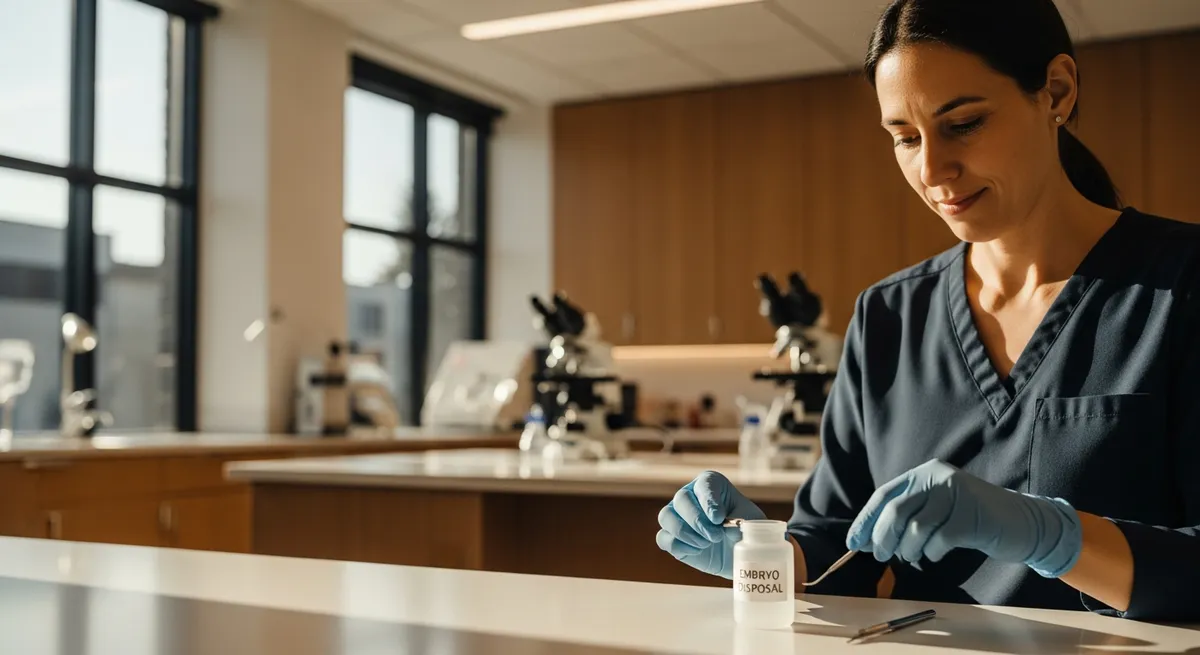
In this scenario, scientists harvest the genetic material from the maternal egg before fertilization and transplant it into a donor egg that has been emptied of its own nucleus. (I like to think of it as moving your grandmother's prized heirloom china into a much sturdier, modern cabinet.) In alternative variations, they extract the fertilized nucleus from the mother egg and relocate it into a donor egg. Both of these clinical paths converge on the same objective: establishing a robust, healthy atmosphere where the genetic code can flourish without interference. I find the level of microscopic precision required here to be almost insulting to my own clumsy nature. (I once tried to assemble a flat-pack wardrobe and ended up creating a very expensive pile of kindling.)
The fundamental science remains robust, yet the broader implications are admittedly daunting. We are observing a scenario where less than one percent of the aggregate genetic data originates from the third-party donor. Yet, in the world of molecular biology, a fraction is a fortress. That negligible 0.1 percent of DNA effectively decides whether a child possesses the capacity to breathe, walk, or view the world. It is the ultimate high-stakes trade. Is the risk worth the potential reward? The families who have watched their children suffer through the progressive decline of mitochondrial disease would say yes in a heartbeat. They are not concerned with the theoretical ethics of the next century; they are worried about the survival of their next child. And I cannot say I blame them. If I were in their shoes, I would likely be the first person in line, ethics be damned.
Key Takeaways
🟢 The Genetic Abyss and Future Generations
Now we get to the part that makes the hair on the back of my neck stand up. Most medical treatments affect only the person receiving them. However, because it changes the mitochondrial DNA, and that DNA is passed down to future generations, we are performing germline modification. If the child is a girl, she will pass that donor DNA on to her children. (It is like a permanent software update that you cannot uninstall.) The National Academies of Sciences, Engineering, and Medicine released a report stating that while MRT is ethically permissible for preventing serious disease, it should not be used for enhancement. But the line between therapy and enhancement is as thin as a strand of hair. What one person calls a life-saving intervention, another might call a boutique upgrade.
Envision attempting to execute a sophisticated software suite on a terminal that is running a marginally incompatible operating system. (I have done this, and it resulted in a very expensive paperweight.) If the communication fails, it could lead to health problems later in life that we cannot predict. A study in the journal Science in 2026 suggests that these interactions are crucial for metabolic health. Despite these fears, the forward momentum of science is difficult to stop. For the families at risk, the theoretical dangers of the future pale in comparison to the tangible suffering of the present. They are looking for a way out of a biological prison. Nevertheless, as a collective society, we must be the ones maintaining control of the leash. We must determine if we are prepared for a world where our DNA is no longer a fixed fate, but a conscious choice.
🤔 The Bottom Line
At the end of the day, Mitochondrial Replacement Therapy is a testament to human ingenuity and our refusal to accept a cruel genetic hand. It is messy. It is loud. It is complicated. But it also offers a path forward for families who have been stuck in a cycle of grief for generations. We are witnessing the birth of a new era of medicine where we are no longer victims of our own biology. That is a powerful, beautiful thing, even if it is a little bit terrifying. (I frequently fail to organize a coherent grocery list, so the fact that trained geneticists are managing the building blocks of life is quite a relief.) We must proceed with extreme caution. We owe it to the future generations who will carry this modified DNA to get it right. We need global cooperation, strict regulations, and a healthy dose of humility. We are playing with the building blocks of existence, and those blocks do not come with an instruction manual. Should you be a parent or a prospective parent confronting these choices, recognize that you are at the absolute forefront of a biological revolution. The path is not clearly demarcated, and the risks remain visceral. However, the potential reward - a healthy child who is liberated from the shadow of a devastating disease - is perhaps the most significant prize science has ever offered. Just remember that while we can edit the code, we cannot predict the full story. We are all merely characters in a biological narrative that is becoming increasingly complex.
Frequently Asked Questions
Is this the same as designer babies?
No. It is not about choosing eye color or athletic ability. It is about preventing a child from suffering from a debilitating and often fatal disease. It is a medical intervention, not a luxury upgrade.
Is the donor DNA permanent?
Yes. The mitochondrial DNA from the donor is a permanent part of the child's genetic makeup. However, it represents less than one percent of the total genetic material.
Is this procedure legal everywhere?
It is not. The legal status varies significantly by country. The United Kingdom was a pioneer in legalizing the procedure, while many other nations are still debating the ethical implications.
Who is the legal mother in this scenario?
In the eyes of the law, the donor is usually just a tissue donor, like someone who gives blood. But biologically, she is providing the machinery that allows the cell to function. Without her, there is no life. (I hope she is someone who likes reading and has a decent sense of humor, though I know that is not how genetics works.)
What are the long-term risks?
While the procedures in the United Kingdom have shown remarkable promise, the long-term effects over decades are still unknown. On occasion, the deleterious mitochondria manage to infiltrate the donor egg during the transfer process. These mutations behave like that specific distant cousin who arrives at the wedding unbidden and promptly monopolizes the premium spirits. Should those mutated mitochondria proliferate, the underlying condition could potentially resurface.
References
Disclaimer: This article is for informational purposes only and does not constitute professional medical or genetic advice. Genetic procedures involve complex ethical and health considerations. Always consult with a qualified medical professional or genetic counselor before making decisions regarding genetic health or reproductive technology.