
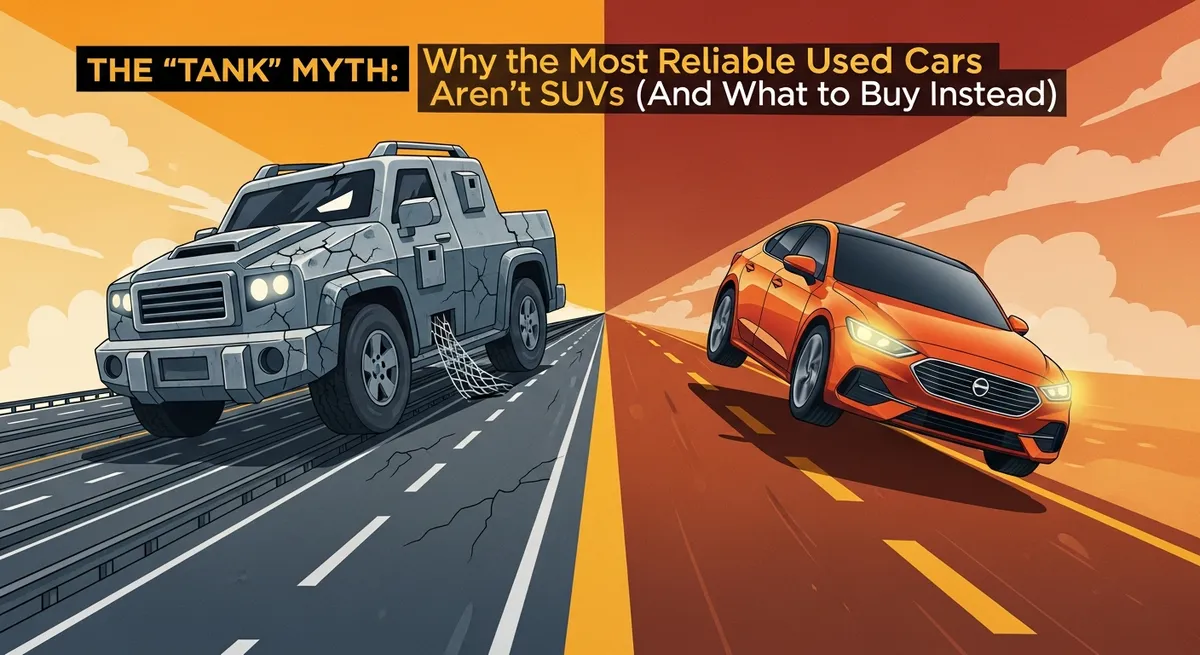
Everyone wants a fortress. We stare at the highway - total madness, usually - and assume the answer is "more metal". It is human nature to want armor. Whether it is a battlefield or just I-95 at 8 AM. But here is the thing that keeps me up at night: that armor is actually a trap. We have been sold a bill of goods by marketing teams that prioritize "feeling" safe over actual physics. When you ignore the flashy ads and look at the raw crash data - the stuff nobody likes to talk about at dinner parties - the picture changes fast. The safest bet for your family isn't the biggest thing on the road; it’s often the one that can actually get out of the way.
Let’s Be Real: Physics Hates Your SUV
I honestly cannot pinpoint the date. Late 90s, maybe? But at some point, we collectively decided that if we aren't driving a literal tank, we are bad parents. The story sells. Oh, it sells. Big equals safe. Small equals squished. It appeals to our lizard brains. But that logic has a fatal flaw.
Gravity.
Here is the physics problem (sorry, I know, boring - but it matters). SUVs are tall. Like, really tall. That means their center of gravity is way up high, hovering somewhere around the windows. Sedans? They hug the pavement. If a deer bolts out? Or that kid texting in the lane ahead slams the brakes? A sedan does not wobble. It just... moves. It turns. It grips the asphalt like it was meant to be there.
An SUV? It tips. The NHTSA - government folks, usually pretty dry - have been practically yelling about this rollover risk for two decades. But nobody listens because the marketing is too good. They show the SUV climbing a mountain; they don't show it flipping over on a rainy Tuesday in Suburbia.
Think about the "Moose Test." It is a famous safety test from Sweden. They swerve a car hard at 45 mph to simulate avoiding a moose. Sedans zip through it. Crossovers and SUVs? They often lift two wheels off the ground. It is terrifying to watch. Picture a linebacker. Huge guy. Intimidating. Now picture a gymnast. If I run at the linebacker, I bounce off. But if I trip him? He goes down hard. The gymnast? She just moves. She steps aside. That is the difference between surviving a crash and avoiding one entirely. And honestly? I’d rather avoid the crash. Every single time.
The Financial Trap (Or: Why You’re Broke)
Safety aside, let's talk about your wallet. (It’s hurting, right? I can tell.)
When you look at used car prices right now, the discrepancy is wild. Because everyone wants a crossover, the prices for them are inflated. You are paying a "cool tax." It is a premium for the image of ruggedness. Meanwhile, perfectly good sedans are sitting on lots, gathering dust, priced thousands of dollars cheaper. It’s a market inefficiency - and if you’re smart, you can exploit it.
I had a friend buy a used Tahoe last year. He loved it for three months. Then he needed tires. Go price out tires for a CR-V. You are looking at $800. Easy. Probably more. For a massive truck-based SUV, try $1,200. For a Civic? Half that. Maybe $450 if you catch a sale.
Brakes are bigger on trucks. Rotors cost more. Calipers cost more. Gas mileage is worse (physics again, pushing a brick through the wind). It adds up. Over five years, the "Tank" costs you thousands more than the "Gymnast." You are literally burning money to look taller in traffic. Is the view really worth $5,000?
The "Uncool" List: Cars That Won't Die
If you can swallow your pride and drive something that doesn't look like a military assault vehicle, you can find some of the most reliable used cars for peanuts. Here is where I’d put my own money (and have).
1. The Toyota Camry (Specifically the 2012-2017 Era) I know, I know. Yawn. It’s the vanilla ice cream of cars. But have you ever tried to kill a Camry? You can’t. You basically have to drive it into a volcano. They run on neglect. Find one with 100k miles? It is just getting warmed up. Seriously. The 4-cylinder engine from this era is bulletproof. It just works.
2. The Mazda3 (2014 or Newer) This right here? It is the closest thing to a cheat code. It handles like a sports car (sort of), gets great gas mileage, and has vehicle safety ratings that rival the expensive luxury brands. Plus, because it’s a Mazda and not a Toyota, it’s usually 10-15% cheaper on the used market. Why? Brand snobbery. Use that to your advantage.
3. The Honda Accord (The V6 Years) If you need power, the V6 Accord is a sleeper. It’s fast. Dangerous fast? No. But fast enough to merge without having a panic attack. And the reliability is legendary. Just watch out for the timing belt service every 100k miles - that is the one maintenance item you cannot skip.
4. The Lexus ES (2013-2018) Want to know a secret? This is just a Camry in a tuxedo. It has the same unkillable bones, but with better leather and more sound deadening. Because it is a "luxury" car, older owners often baby them. You can find these with full dealer service records for the same price as a beat-up Highlander. It is the smartest buy on the used market, period.
But What About the Snow? (The AWD Myth)
I hear this constantly. "I need an SUV because it snows three times a year."
Listen to me closely: All-Wheel Drive (AWD) helps you go. It does not help you stop.
Here is the physics: A sedan with winter tires beats an AWD SUV on all-seasons. Every time. It is not even close. I’ve seen 4x4 trucks spun out in ditches while little Civics with snow tires putter right past them. The physics of stopping on ice doesn't care how many wheels have power. It only cares about friction. We overestimate the car and underestimate the rubber. If you live in Buffalo, buy snow tires. If you live in Virginia and it snows once, just stay home. You don't need a Canyonero.
Let's Do The Math (The Real Cost)
Here is the breakdown. (It is ugly, but look anyway). This is a rough breakdown of what you're actually signing up for over 5 years.
| Expense Category | Used Mid-Size SUV (The Tank) | Used Sedan (The Gymnast) | The "stupid tax" |
| Rubber (4 New Tires) | $950+ | $500 | +$450 |
| Fuel (15k miles/yr) | ~$2,600 (If you're lucky) | $1,750 (30 MPG) | +$875/year |
| Insurance Premium | Higher (Riskier) | Lower | ~15% savings |
| Rollover Risk | Moderate to High | Near Zero | Priceless? |
How to Buy Without Getting Fleeced
So, you’re ready to look for affordable used vehicles. Do not just wander onto a lot without a plan. That is reckless. Like swimming in shark water while bleeding. Dealers smell fear. They smell "I need a car today."
First, get a pre-purchase inspection. Always. I don't care if the seller is your grandma. Take it to a mechanic who has no skin in the game. Pay them the $150. If the seller refuses? Walk away. Actually, run away. They are hiding something major - frame damage, flood history, or a transmission that is about to explode.
Second, ignore the monthly payment. Dealers love to ask, "What payment are you looking for?" It’s a classic trap called the "Four Square" method. They manipulate the trade-in, the down payment, and the monthly rate to hide the actual price of the car. Negotiate the "Out the Door" price. That is the only number that matters. If you focus on the payment, they’ll just stretch your loan out for 84 months until you’re paying for a car that died three years ago. Don't do that to your future self.
FAQ: Because I Know You Have Questions
Are used SUVs always a bad idea?
No. I mean, if you are towing a boat or hauling six kids, get the Suburban. You have no choice. But if it’s just you, a partner, and a dog? You’re paying a premium for air you aren't using. Even the "reliable" SUVs drain your bank account faster than a sedan. It is just math.
Wait, Isn't Mileage The Main Factor?
Actually? No. I would take 120k highway miles over 60k city miles in a heartbeat. City driving is violence. Stop. Start. Potholes. Idling. It destroys suspensions and taxes the cooling system. On the highway? The engine is just chilling. It is happy. Check the service records first. Ignore the odometer for a minute. A well-maintained car with high miles is often a better buy than a neglected low-mileage one.
Are Hybrids Actually Worth It?
Hybrids are great - until the battery dies. If the car is over 10 years old, you have to check the battery health. A replacement pack can cost $3,000. That eats up a lot of gas savings really fast. If you are buying an older Prius or Camry Hybrid, budget for a battery replacement just in case. If the battery has already been replaced? Buy it immediately.
What about the "Command View"? I like sitting high up.
I get it. It feels powerful. But remember that thick pillars (the bars holding the roof up) create massive blind spots. You might see over the car in front of you, but you might completely miss the Miata right next to you. High seating position does not equal better visibility. It just feels like it does.
Is it safe to buy from a private seller?
Usually, yes. In fact, it is often better. You get to meet the owner. Are they a car nut who kept receipts? Or are they messy? Private party sales avoid dealer fees, which saves you money. Just make sure you get the title in hand and meet in a safe public place. And get that inspection.
Final Thoughts
Look, buy what makes you happy. If you love sitting high up above traffic, fine. Buy the truck if you have to. But just do not buy it because you think it is a magic shield. That’s just fear talking. And fear is a terrible financial advisor. Be smart, buy the sedan, and use the money you saved to take a vacation. You will be safer getting there, anyway.
Disclaimer: This article is for informational purposes only and does not constitute financial, legal, or professional safety advice. Vehicle reliability and pricing vary by region and condition. Always consult a qualified mechanic for inspections and verify safety ratings with official sources like the NHTSA or IIHS before purchasing. Past performance of vehicle models does not guarantee future results.


