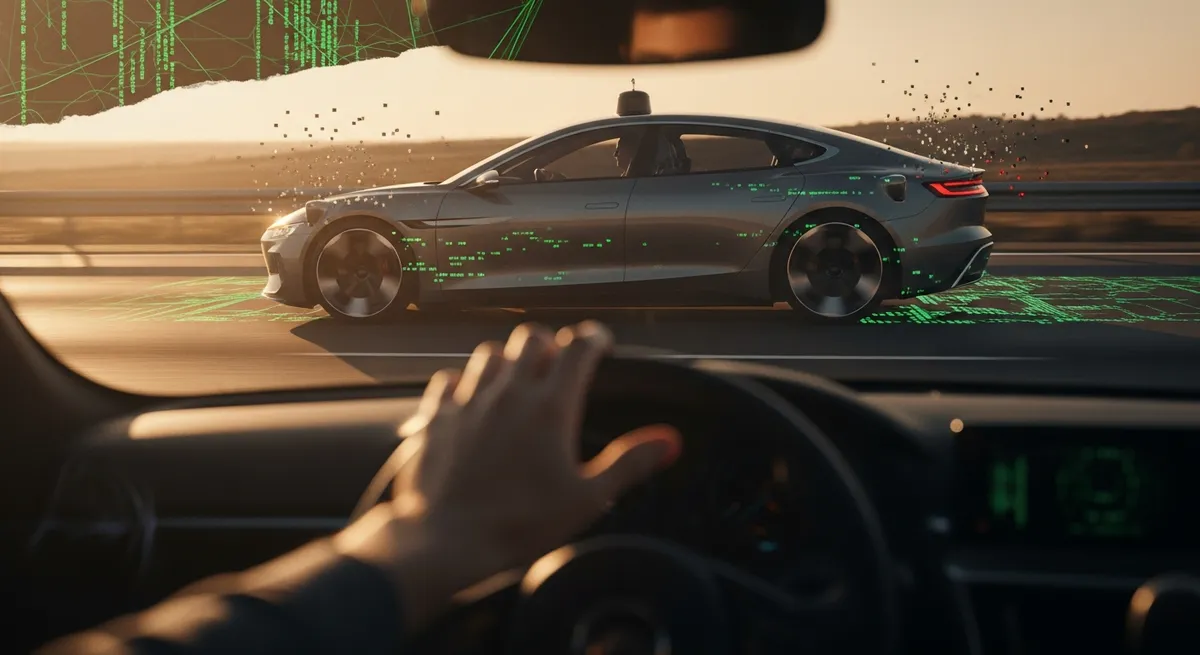
You've seen the commercials. The ones where a photogenic family plays Uno in the backseat while their SUV glides effortlessly down the highway, dodging traffic like a sentient robot butler. It looks amazing. It looks relaxing. But here is the messy, frustrating reality we actually live in (hello, 2025): that car doesn't exist. Not really. What we have instead is a confusing jumble of "driver assist" features that beep incessantly if you drift an inch. These are often marketed as "Full Self-Driving" by tech billionaires who - let's be honest - are selling a dream rather than a finished product. It's enough to make you want to scream at your dashboard. If you're waiting for the day you can legally nap during your morning commute, I have some bad news (and a little bit of good news) about how far away that future actually is. Let's cut through the Silicon Valley hype right now.
The "Self-Driving" Lie (Or: Why You Still Have to Steer)
Let's rip the band-aid off immediately. Most cars on the road today? They're dumb. Well, maybe not "dumb" exactly, but they certainly aren't smart enough to drive themselves without you babysitting them. Every. Single. Second.
We classify these things using levels - 0 through 5 - defined by the SAE (Society of Automotive Engineers)¹. It sounds technical. It is. But you need to know this because marketing teams love to blur the lines to sell you a $10,000 software package you might not need.
Level 0-2: You Are Still the Captain This is what you probably drive. Cruise control? Level 1. Lane keeping assist? Level 2. That fancy Tesla Autopilot? Also Level 2 (mostly). The car helps, sure. It brakes. It steers a little. But if you take a nap, you crash. Period.
Level 3-5: The Robot Takeover (That Isn't Happening Yet) Here is where it gets tricky. Level 3 is "conditional automation." The car drives, but it might shout at you to take over if it gets confused by, say, a construction cone or a weird shadow. And this handoff? It's dangerous. Ideally, we want Level 5 - no steering wheel, no pedals, just magic. We aren't there. Not even close.
The "Uncanny Valley" of Automation
The real danger right now isn't the technology itself - it's the gap between what the car can do and what you think it can do. Engineers call this the "handoff problem." Imagine reading a book at 70 mph because your car feels totally competent. Suddenly, the system beeps. A construction zone appeared. The sensors are confused.
You have maybe three seconds to drop the book, grab the wheel, assess the traffic, and drive. Humans are terrible at this. Studies show it takes us about 7 to 10 seconds to regain full situational awareness after being distracted. In a car moving 100 feet per second, that delay is catastrophic. This is why many experts think Level 3 is actually more dangerous than Level 2 - it gives you a false sense of security right before it abandons you.
The "Musk" Problem: Cameras vs. Lasers
There is a war happening in the engineering world right now. (I know, sounds dramatic. But seriously, billions of dollars are at stake.)
On one side, you have Elon Musk and Tesla. Their argument? Humans drive with eyes (cameras), so cars should too. They use AI to interpret visual data. It's a logical argument. It's also incredibly risky.
Musk's approach relies heavily on "computer vision." It tries to think like a human. But computers get confused by things humans ignore. A shadow under a bridge? The computer might think it is a stopped truck and slam on the brakes. This is called "phantom braking," and if you check the NHTSA complaints list, you will see it happens way more than it should. It is terrifying to have your car slam on the brakes at 65 mph because it got spooked by a shadow.
On the other side? Literally everyone else. Waymo, Cruise, Mercedes. These guys use cameras, radar, and something called LiDAR (Light Detection and Ranging). LiDAR shoots laser pulses to map the world in 3D. It can "see" in pitch black. It knows exactly how far away that pedestrian is. It knows the shadow is flat, not a solid object.
So why doesn't everyone use LiDAR? Money. The sensors used to cost $75,000 a pop². They are cheaper now - way cheaper - but Musk refuses to use them. He calls them a "crutch." Is he right? Maybe. But personally? I'd rather my robot chauffeur have lasers than just a camera that might get blinded by the sun.
The Hidden Cost of "Smart" Cars
We need to talk about your wallet. (Sorry. I know nobody likes thinking about repair bills.) But the financial reality of owning these high-tech vehicles is something the brochures conveniently leave out.
Here is the thing about all these sensors and cameras. They break. And when they break, they are excruciatingly expensive to fix. It used to be that a car was just metal and rubber. Now, it is a rolling network of delicate computers.
Remember when a fender bender cost $300? Good times. Now? That bumper has ultrasonic sensors and a radar unit behind it. A minor tap in a parking lot can easily turn into a $3,000 calibration nightmare. Even replacing a windshield is a headache because the forward-facing cameras have to be realigned with surgical precision.
The $1,500 Windshield
Let's get specific, because the numbers are shocking if you haven't seen them before. Back in the day (say, 2010), replacing a cracked windshield cost about $250 to $400. You called a guy, he came to your driveway, he swapped the glass, done.
Not anymore. In a modern vehicle equipped with ADAS (Advanced Driver Assistance Systems) - basically any car made in 2025 - that glass acts as a lens for the forward-facing cameras. You can't just slap in a piece of aftermarket glass. You need OEM-quality glass that won't distort the camera's view.
But the glass isn't even the expensive part. It's the calibration. Once the new glass is in, a technician has to hook up a computer and place specific targets at exact distances from the car to "teach" the camera where to look. This labor costs $600 to $900 on top of the glass. Suddenly, a rock chip from a dump truck isn't an annoyance - it's a $1,500 insurance claim.
The Bumper Sensor Trap
The same math applies to your bumpers. A minor dent used to be a $400 body shop fix. Maybe you'd even ignore it. Now, that plastic cover hides radar sensors (for adaptive cruise control) and ultrasonic sensors (for parking assist).
If you paint over a sensor, it stops working. If you nudge a radar unit just three millimeters out of alignment, the car might think a mailbox is in the middle of your lane. Repairing this often requires proprietary software that only the dealership has. So instead of your local mechanic, you are stuck paying dealership labor rates of $180+ an hour.
The Insurance Reality Check You might think, "Hey, safer cars mean cheaper insurance, right?"
Wrong. (Well, usually wrong.)
While safety features do prevent accidents, the accidents that do happen are way more expensive to repair. Insurance companies know this. They aren't charities. They have crunched the numbers and realized that while frequency of claims might drop slightly, severity of claims (the cost per claim) is skyrocketing. So until autonomous vehicles prove they can eliminate accidents almost entirely, your premiums are probably going up, not down³.
Comparison: What You Think You're Buying vs. Reality
Let's look at the numbers. Or rather, the features. Because the brochure never tells the full story, and the terminology is deliberately confusing.
What Should You Actually Do?
So, where does this leave you? Should you wait for the robot cars? Should you buy a dumb car from 2010 to avoid the headaches?
Here is my advice - take it or leave it - based on watching this industry overpromise and underdeliver for the last decade.
1. Buy the safety, ignore the "autonomy." Automatic Emergency Braking (AEB) is a lifesaver. Literally. It stops you from rear-ending someone when you're distracted. Blind-spot monitoring? Essential. Pay for those. They work. They don't require you to rethink how you drive; they just watch your back. But anything that promises to "steer for you"? Treat it as a gimmick, not a feature.
2. Skip the "FSD" upsell. Unless you are a tech enthusiast who loves testing buggy software, don't drop $10k+ on "Full Self-Driving" promises. The regulatory hurdles alone mean widespread Level 5 is years away. Maybe decades. You are essentially paying up front for a feature that might not be legal or functional before you sell the car.
3. Test drive the "nags." When you test drive a new car, turn on the Lane Keep Assist immediately. Does it gently nudge you? Or does it jerk the wheel like a terrified student driver? Some systems are aggressive and annoying. If it feels jerky on a 10-minute test drive, you will hate it on a 4-hour road trip. Trust your gut. If the tech annoys you, see if it can be permanently turned off before you buy.
4. Check your insurance coverage. If you buy a car loaded with sensors, make sure your policy covers "OEM parts." If you need a repair, aftermarket parts sometimes don't play nice with delicate calibration sensors. You don't want to be fighting with your adjuster about whether a generic bumper cover is messing up your radar.
FAQ: The Questions You're Too Embarrassed to Ask
Q: Can I sleep in a Tesla while it drives?
No. Please don't. People have tried. People have also crashed. It's illegal and terrifyingly dangerous. The systems monitor your eyes or your torque on the steering wheel. If you nod off, the car will eventually stop in the middle of the highway, which is not exactly safe.
Q: Will self-driving cars actually reduce traffic?
Ideally? Yes. Computers don't rubberneck at accidents. But in the transition phase - where robots mix with aggressive human drivers - traffic might actually get worse because the robots are too cautious. A self-driving car might wait for a massive gap to turn left, while a human would just gun it. That hesitation causes backups.
Q: Is my car spying on me?
Sort of. The cameras are recording. The GPS knows where you are. Manufacturers anonymize this data (usually), but modern cars are essentially privacy nightmares on wheels. If this bothers you, look into the privacy settings in the infotainment menu, though you often can't opt out of everything.
Q: Do these systems work in bad weather?
Barely. Heavy rain, snow, or even thick fog can blind the sensors. If you can't see the lane markers, neither can the car. This is why you mostly see "robotaxi" tests in sunny places like Phoenix rather than during a blizzard in Buffalo.
Q: When will Level 5 actually happen?
The optimists say 2025. The realists say 2035. The cynics (and I'm leaning this way lately) say we might never get 100% anywhere-anytime autonomy. We might just get really good highway assistants. The situation is shifting in 2026, though (maybe) - but don't hold your breath.
References
Disclaimer: This content is for informational purposes only and does not constitute legal or financial advice. The information regarding autonomous vehicle technology and insurance costs is current as of the time of writing but subject to rapid change. Always consult with a certified mechanic or insurance professional for advice specific to your vehicle and policy.