
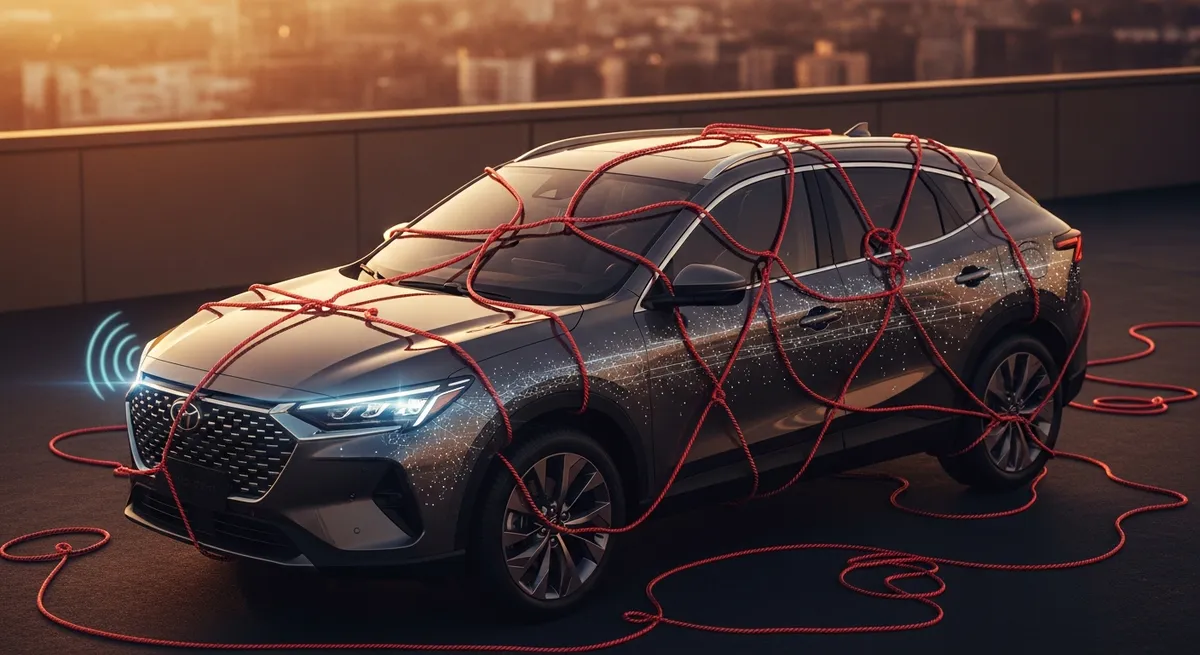
You really tried to be responsible. Seriously. You bought the crossover with the five-star safety stickers - the one that screams at you if you drift three inches right. The one that slams the brakes before you even notice the taillights ahead. Logic - standard, human logic - suggests this should lower your premiums. If you aren't crashing, the insurance company isn't paying, right? Wrong. The bill arrives, and instead of a discount, you look at a hike that ruins your Tuesday. It feels like a mistake. But it isn't. It is a feature of the modern auto market. We need to talk about why your safety features are silently draining your wallet, and more importantly, how you can fight back against the algorithms determining your rate.
The Great "Safety" Paradox (Or: Why Logic Doesn't Apply Here)
Maybe you sprang for the model with the lane-keep assist. Or the automatic braking. Probably because you wanted to keep your family safe (which is reasonable). Safer cars crash less - that is a fact. So they should cost less to insure - that is fiction.
And that is where the industry gets you. The betrayal is baked in. Insurers have a name for this mess: "severity trend." Which is basically corporate-speak for "we crash less, but when we do, it costs a small fortune."
Remember the old days? (I do.) You took the wreck to a guy named Tony. He hammered it out, sprayed some paint, and you were back on the road for $500. Maybe $800 if you went to the fancy place with the espresso machine. Those days? Dead and buried.
That bumper isn't just a piece of plastic anymore. It is a computer. It is a nervous system. It is packed with ultrasonic sensors, radar units, and wiring harnesses that cost more than my first Honda. Crack that plastic now, and you aren't just fixing a dent. You are recalibrating a radar system.
The Hidden Cost: The Calibration Nightmare
Let's dig a little deeper into why this happens. It is not just the parts. It is the labor. When you replace a windshield on a late-model vehicle, you cannot just slap the glass in and drive away. The forward-facing camera mounted behind the rearview mirror has to be calibrated.
This is where it gets ridiculous. To do this, a shop needs a perfectly level floor. They need massive targets set up at specific distances. They need controlled lighting. They essentially need a laboratory.
I saw a bill recently for a minor fender bender - 5 mph impact, max - that cost $3,400 to fix. Why? Because the sensors had to be realigned by a specialist. A specialist who charges $150 an hour. This drives repair costs through the roof, and insurers pass that bill right back to you. (Thanks, guys.)
Think about it. If a mechanic has to spend three hours setting up targets and running software just to tell the car where "forward" is, that is three hours of labor billed at premium rates.
And if they get it wrong? The car might brake for a phantom obstacle on the highway. So the liability is huge. Which means the insurance premiums to cover the shop's liability are huge. It is a vicious cycle of cash, and you are the one paying for it.
Let's Look at the Math (Even If It Hurts)
Let's assess the damage. Federal price data show motor vehicle repair costs jumped by more than 20% in just two years. That isn't ordinary inflation. That is technology.
The "tech tax" is real, and it is itemized:
That is why your premium went up. The best auto insurance companies know this math better than we do. They know that a simple windshield crack isn't a $200 fix anymore; it involves recalibrating the lane-departure camera, which requires a clean room and a PhD (slight exaggeration, but barely).
The "Total Loss" Trap
Here is another fun fact insurers do not advertise. Because these repairs are so expensive, cars are getting "totaled" much faster. In the past, if you had a car worth $20,000 and you did $10,000 in damage, they would fix it. Now? If the sensors and airbags push the repair bill to $14,000, they might just scrap the car.
Why does this matter to your rate? Because the insurance company has to pay out the full cash value of the car more often. They are terrified of a small accident turning into a total loss. So they charge you more upfront to hedge their bets. It is risk management 101, but it feels like robbery when you are just trying to drive to work.
So, Are You Just Stuck Paying This?
No. Well, not if you are smart about it. The secret isn't driving a clunker (though my wallet misses my ‘98 Corolla). The secret is usage-based insurance - or UBI. Or just aggressively shopping.
Here is the thing about loyalty: it does not pay. Not these days. If you have been with the same carrier for five years, you are almost certainly overpaying. They call it "price optimization." I call it a laziness tax.
They assume you won't leave. Prove them wrong. You need to compare car insurance rates every six months. Seriously. Put a reminder in your phone right now. I will wait.
Done? Good. Because rates fluctuate wildly based on how each company’s algorithm treats these new tech features. Company A might penalize you for the expensive sensors. Company B might give you a discount because the automatic braking actually prevents accidents. You won't know unless you look.
The "Cheat Code" for Lower Rates
If you want cheap car insurance without sacrificing coverage, look into telematics.
That's the little device you plug into your car (or the app on your phone) that tracks how you drive.
I know, I know - "Big Brother is watching." It feels creepy. But here is the reality: your car is already tracking you. Your phone is tracking you. You might as well get paid for it. If you actually drive safely - no hard braking, no late-night speeding - these programs can drop your rate by as much as 30%. That is real money.
Action Plan: Stop Bleeding Cash
Don't just sit there and take the renewal notice. Fight back. Here is exactly what you need to do tomorrow morning (or right now, if you are procrastinating on work).
1. Get the "Paper" Discount Go paperless. Pay in full if you can. These sound like small potatoes, but they add up to 5-10% savings instantly. It is free money.
2. Shop the Market (Aggressively) Get at least three auto insurance quotes. Don't just look at the big lizards and emus on TV. Check regional carriers. Sometimes the smaller guys have better rates for modern cars because they have lower overhead.
3. The Deductible Game If you have an emergency fund, raise your collision deductible from $500 to $1,000. This single move can drop your premium by 15-20%. Just make sure you actually have the $1,000 in the bank. (Don't be the person who does this with zero savings. That ends badly.)
4. Check Your "Insurance Score" This is the quiet reality of the industry. In most states, insurers use a variation of your credit score to set your rate. They claim there is a correlation between credit history and claim frequency. (I think it is just a way to charge poor people more, but nobody asked me.)
If your credit has improved in the last year, call your insurer immediately. Ask them to re-run your insurance score. You might qualify for a lower tier instantly. If they refuse to re-run it until renewal, that is your sign to switch companies.
FAQ: The Stuff Nobody Tells You
Q: Does the color of my car actually matter?
That's a myth. Red cars don't cost more to insure. But custom paint jobs? Yeah, those will cost you extra to cover because they are a nightmare to match if you get scratched.
Q: Will my rate go down as the car gets older?
Usually, yes. But with these high-tech cars? Maybe not as much as you expect. The sensors don't get cheaper to fix just because the car has 100,000 miles on it. In fact, finding parts for older tech systems can sometimes get harder (and pricier).
Q: Is "Forgiveness" worth paying for?
Accident forgiveness sounds great - until you realize you are paying extra for it every month. Do the math. If you haven't had a ticket in ten years, you might be paying for insurance on your insurance. Skip it and pocket the difference.
Q: Should I bundle my home and auto?
Usually, yes. But be careful. sometimes the "bundle" discount blinds you to the fact that the auto portion is still overpriced. Check the prices separately first. If the auto policy is $500 more than a competitor, a $50 bundle discount isn't worth it. Do the math yourself.
Q: Is Gap Insurance actually a scam?
Not always. If you owe more on your loan than the car is worth (which is common with how fast new cars depreciate), Gap Insurance is a lifesaver. If you total the car, it pays the difference so you aren't paying off a loan for a car that doesn't exist anymore. If you have equity, though? Skip it.
Disclaimer: I am a writer, not a licensed insurance agent. This article is for informational purposes only. Rates vary based on your location, driving history, and credit score. Always read the fine print before signing anything.


