
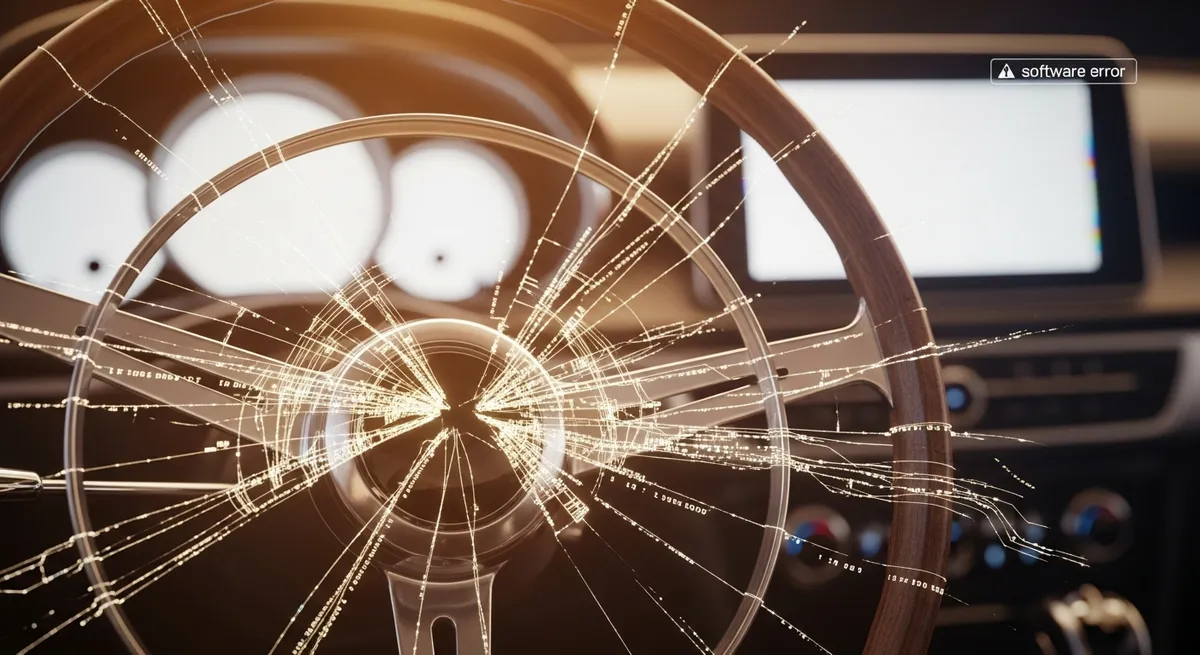
Buying a car used to be simple. Actually simple. You kicked tires, checked oil, and haggled over floor mats. It was mechanical. Honest. But those days didn't just fade away. They were deleted. We need to have a serious - and uncomfortable - conversation about the risks of this tech revolution before you sign that next lease. Why? Because that machine in your driveway isn't really a car anymore. It represents a laptop. A very expensive, potentially glitchy laptop that might decide to freeze while you are ten minutes late for work. It sounds like bad sci-fi, but it is the new normal.
Wait - Did I Actually Buy a Car?
Here is the reality. The industry calls it a "Software Defined Vehicle." (Fancy term, right? Sounds expensive.) But what that actually means for you is... well, it is complicated.
Think about your phone for a second. Seriously. Look at it. It sits there, demanding updates, freezing when you need it most.
It works great for about two years. Maybe three if you're lucky. Then an update hits - usually while you're sleeping - and suddenly the battery drains in four hours. Or apps crash. Annoying? Yes. If Candy Crush freezes, you just reboot. No harm done. Nobody gets hurt.
Now? Take that glitch and put it inside a 5,000-pound SUV doing 70 mph on the interstate. That is... well, it's terrifying.
This isn't some hypothetical "what if" scenario. The National Highway Traffic Safety Administration (NHTSA) has logged a steady stream of software-related recalls in recent years. Screens going black while reversing. Phantom braking. (I really wish I was joking about the "phantom" part. I'm not.) It feels like a bait-and-switch. A total betrayal. You drop $50,000 on a machine - fifty grand! - and it gets bricked because of a bad line of code pushed from a server in Silicon Valley?
That's the new deal. And it is a deal nobody really signed up for. We wanted safer cars, sure. We wanted backup cameras. But did we want cars that need to "boot up" before we can shift into drive? Probably not.
The "Update" From Hell (That Nobody Asked For)
We have to talk about over-the-air updates (OTAs). In theory? They sound brilliant. You wake up, grab your coffee, and your car has better range or a new interface. Magic.
In practice? It is Russian Roulette.
Sometimes the update fixes a bug. Great. But other times - and this is what the dealerships whisper about when you aren't listening - it breaks something else. Maybe your Bluetooth stops connecting. Maybe the climate control menu moves three layers deep into a touchscreen sub-menu. (Who thought that was a good idea? Serious question - I want to meet them.)
The problem is control. You don't own the software. You're just licensing it. The manufacturer can change how your car drives, feels, or sounds remotely. And you can't really say no. Not if you want the thing to start. It creates a dynamic where you are constantly waiting for the other shoe to drop. Will the next patch improve your battery life, or will it throttle your charging speed to "protect the battery" (a common excuse)? You have zero say in the matter.
A Quick Reality Check on "Features"
You used to buy features. Now? You rent them. Enter the world of car subscription services. It is the "Netflix-ification" of your commute, and it is draining.
I saw a headline the other day that legitimately made me spit out my coffee. (And I don't scare easily). Heated seats. As a subscription. $18 a month. For hardware that is already installed in the car. Think about the audacity of that. You paid for the heating element. You paid for the wiring. But a software lock prevents you from using it unless you pay a monthly ransom. That's not innovation. That's a shakedown. But it's happening because software allows manufacturers to lock features behind a paywall, just like a video game.
Want the extra horsepower your engine is physically capable of? Pay up. Want the advanced headlights to actually swivel? Swipe the card. This shift from "ownership" to "usership" is the single biggest threat to consumer value in the automotive world. You pay forever, but you own nothing.
Is It Safe? (The Million Dollar Question)
So, is this tech safe?
Well... yes. Mostly. Until it isn't.
Automotive cybersecurity is the buzzword of the decade for a reason. When a car is connected to the internet 24/7, it’s vulnerable. Researchers have already demonstrated they can hack into certain models, mess with the radio, or even cut the transmission remotely, as the famous 2015 Jeep Cherokee demonstration showed. Scary stuff. It is not just about someone stealing your car - though that is easier now too with relay attacks on key fobs. It is about someone taking control of the vehicle.
Manufacturers claim they are working overtime to patch these holes - maybe they are - but it is an arms race. Hackers on one side. Overworked engineers on the other. And you? You are just the one sitting in the passenger seat (well, driver's seat, technically) hoping the good guys win.
The Privacy Nightmare No One Talks About
It gets worse. The Mozilla Foundation did a deep dive into this, and what they found was... disturbing. Modern cars are data vacuums. They track your speed, your location, your braking habits, and sometimes even your biometric data. Where does that data go? To insurance companies. To advertisers. To the highest bidder.
The Depreciation Bomb: Why Tech Rot is Real
Here is another angle the salesperson definitely won't mention: Depreciation. Mechanical cars age gracefully. A 10-year-old Honda Civic? Still a great car. Reliable. But a 10-year-old piece of tech? It is a paperweight.
Software Defined Vehicles are going to age like milk. Not wine. Milk. That massive touchscreen that looks futuristic today? It will look laughable in five years. The processor running the infotainment system is going to struggle to run the latest apps, just like an old iPhone trying to run the latest iOS update. It chokes. This means the resale value of these "smart" cars could plummet faster than anything we have seen before. I mean, who wants to buy a used car with a glitchy screen and features that require a monthly credit card charge just to activate?
How to Protect Yourself (Without Walking Everywhere)
Look. I am not saying we should all go back to driving horses and buggies. (Though the hay budget might be cheaper.) But you have to be smart. You have to be cynical.
If you are in the market for a vehicle, change your strategy. Don't just kick the tires. Check the code history.
Here is the cheat sheet:
1. Avoid the "First Year" Models. Never buy a model in its first year of production. Just don't. You are effectively the beta tester. The guinea pig. Let someone else deal with the glitchy infotainment system crashing every Tuesday. Buy the version that comes out two years later. Wait until they have patched the embarrassments.
2. Ask About the Chipset. This sounds nerdy - and it is - but you have to ask the dealer: "How long is the hardware supported for updates?" If they give you a blank stare? Walk away. Fast. You need to know if this car will still be able to run Spotify - or whatever we use - in 2030.
3. Read the Data Privacy Policy. Seriously. I know. I know. Nobody actually reads the Terms of Service. It is boring. It is dense. Read it anyway. Or at least search for "data sharing." See if they sell your driving habits to insurance companies. (Spoiler: Some do. And it can jack up your rates.)
The Bottom Line
Cars are getting smarter. That is just a fact. But "smart" doesn't always mean "better."
Sometimes? "Smart" just means "more complicated."
We are in a weird, messy transition period. The tech is moving faster than the reliability can keep up. So be the skeptic. Ask the hard questions. And if a car requires a monthly subscription just to keep your butt warm in December? Maybe tell them to keep it.
Frequently Asked Questions (Real Talk)
Can I actually opt out of data collection?
Sort of. Maybe. Usually, there’s a setting deep in the menu to turn off "targeted advertising" or "enhancement data." But turning off everything might disable features like navigation or emergency SOS. It’s a trade-off. Convenience vs. Privacy. Pick your poison.
Do software updates cost money?
Right now? Usually no. Most over-the-air updates for fixes are free. But for "feature" upgrades? Absolutely. Expect to pay for those. The industry wants that recurring revenue.
Is a mechanical car safer from hackers?
100% yes. You can't hack a carburetor with a laptop. If you are paranoid about cybersecurity, a 2005 sedan is the safest place on earth. But good luck finding one with low mileage.
Will my car stop working if I don't update it?
In most cases, the car will still drive. The engine and brakes are (usually) separate from the infotainment system. That said, you might lose access to navigation, remote start apps, or entertainment features if you refuse updates for too long. It is a slow degradation rather than a sudden stop.
Can the manufacturer disable my car remotely?
Technically? Yes. Repossession agents are already using remote disable technology to shut down cars when payments are missed. While it is unlikely a manufacturer would do this without cause, the capability exists in the code.
Disclaimer: This article is for informational purposes only and does not constitute financial or legal advice. Consult a professional before making major purchase decisions.


