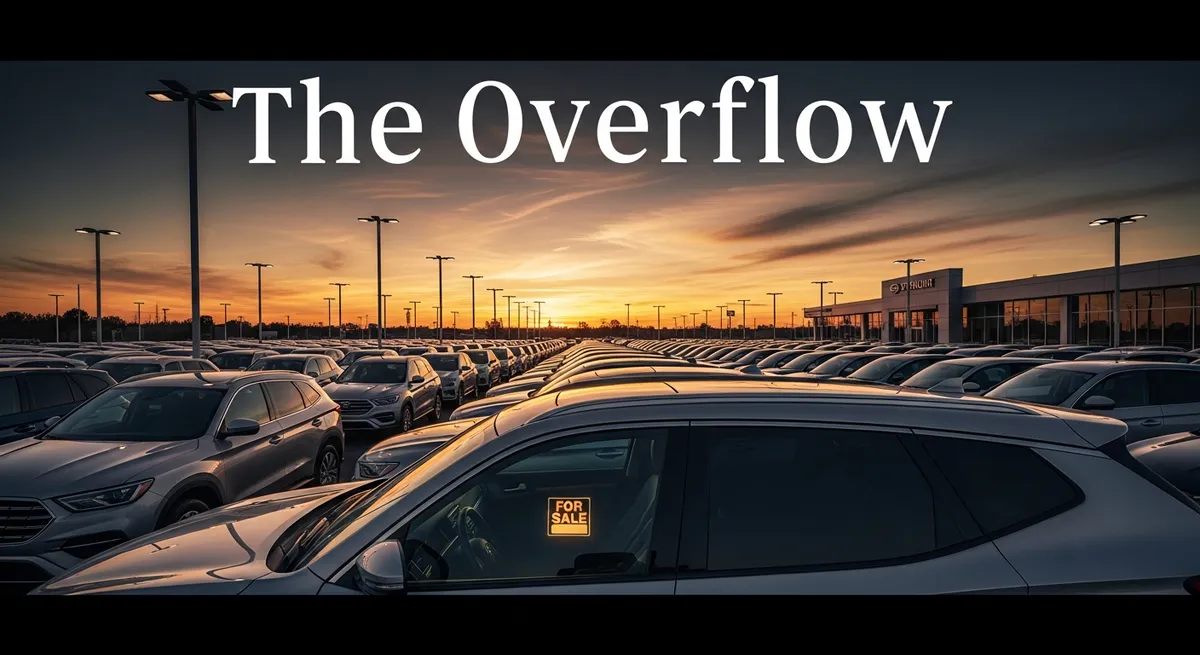
You’ve probably driven past a local dealership lately and noticed something strange. The lots aren’t empty anymore - actually, they are absolutely overflowing. It’s a jarring sight after years of shortages, isn’t it? For a long time, buying a car meant paying sticker price (or worse) and waiting six months for delivery. But the script has flipped. Suddenly, dealers are sitting on a mountain of inventory they can’t move fast enough, and that silence you hear on the sales floor is actually the sound of leverage shifting back to you. I’ve been tracking these inventory numbers for a decade, and frankly, the current backlog of unsold SUVs is starting to look like a massive headache for them - and a potential goldmine for your wallet.
The "Leftover" Problem (Or: Why the Lot is Full)
Here’s the thing. Dealers don't own those cars. They finance them. It's called a "floor plan," which is just a fancy term for a massive, high-interest credit card that the dealership uses to buy stock from the manufacturer. Most people don't realize this, but a dealership is essentially a logistics company that borrows money to hold metal boxes until you buy them.
Every day a car sits there? It costs money. Real money. And not just a few pennies.
Back in 2021, cars sold in three days. Now? The best SUV deals are sitting on lots for 60, 90, sometimes 120 days. (I saw a Jeep on a lot last week that had a birthday. Literally. It had been there a year.) This is panic territory for a general manager. When inventory ages, the interest payments start eating into the profit margin until - poof - the profit is gone. That's when they get desperate. And desperate is exactly where you want them.
It’s not because the cars are bad. Usually. It’s because the manufacturers - who are totally disconnected from reality, by the way - kept shipping 2024 model clearance units even though interest rates spiked and buyers pumped the brakes. They operate on a "push" system. They build the cars, ship them, and essentially say, "Good luck, figure it out."
This disconnection creates a massive financial pincer movement on the dealer. They have the factory screaming at them to take more units to earn their allocation of the "good stuff" (like the rare sports cars or heavy-duty trucks), but they have the bank screaming at them to pay down the line of credit on the SUVs nobody is buying. Caught in the middle? The sales manager, who is now sweating bullets and looking for literally anyone to take a unit off his hands.
The "Hidden" Inventory Nobody Talks About
Most people walk onto a lot and look at the shiny row in the front. The "front line." Big mistake. That is exactly where they want you to look.
That’s the bait. Those are the newest arrivals, the ones the dealer isn't paying interest on yet. You want to go to the back. Or better yet, the overflow lot down the street. That’s where the "distressed" merchandise lives. These are the unsold SUVs that are costing the dealer cash every single morning the sun comes up.
The data from Cox Automotive is actually startling - inventory levels haven't been this backed up in years¹. It is not normal. We aren't looking at a minor ripple in the supply chain here. It is a total deluge. But dealers won't advertise this. They won't put a sign on a car saying, "Please buy me, I'm costing $15 a day in interest." You have to know where to look. You have to be the detective.
You also have to understand the physical toll this takes on the cars - something insiders call "Lot Rot." When a car sits for six months, weird things happen. The battery starts to die (and gets jump-started five times). The fluids settle. The tires get flat spots. Dealers are terrified of Lot Rot because it means they have to spend more money reconditioning a "new" car just to sell it. If you point this out? You win.
Three Signs a Dealer is Ready to Fold
I've negotiated thousands of car deals. (Too many, honestly. My blood pressure proves it.) Here are the tells. If you see these, you have the upper hand.
Running the Math (Because It Gets Ugly)
So, let's talk about the actual cash value of this situation. It varies, obviously. But the principles are the same everywhere.
But let's look at the math. Picture a $50,000 SUV collecting dust for four months - with floor plan rates hovering near 7%, that vehicle has burned through roughly $1,100 in interest alone. That is profit that has evaporated. They aren't trying to hit a home run anymore; they are just trying to stop the bleeding. This is your window.
Think about it. If they sell it to you at a $2,000 loss today, it is actually cheaper for them than holding it for another three months and losing $3,000 in interest plus depreciation. You are doing them a favor by taking it. (Okay, maybe not a favor, but you are solving a problem for them.)
Insider Tip: Don't ask for a discount. Ask for the "aged unit price." Use that specific phrase. It signals that you know the game. It tells the salesperson, "I know this car is a liability, not an asset." Watch their face when you say it. They will know you aren't a standard walk-in customer.
Comparison: The Trap vs. The Opportunity
Let's look at the numbers side-by-side so you can see why the new stuff is a bad deal right now.
The interest rate column is the most important part of that table. Manufacturers will often subsidize the interest rate on the old stuff to clear the decks. Getting 1.9% on a 2024 vs 7.9% on a 2025 can save you thousands over the life of the loan. It is literally free money.
The Blueprint: How to Actually Buy It
Okay, enough theory. You want a car. You don't want to get ripped off. Here is the play.
First, stay home. Seriously. Don't go to the dealership yet. The moment you step on the lot, you are playing by their rules, drinking their bad coffee, and waiting in their little cubicles. Do your dealer inventory recon online.
Search for the specific model you want. Sort by "lowest price" or "oldest listing." Identify the cars that look like they've been stuck in internet purgatory for a while. Then, email the internet sales manager. Not the general inquiry box - find a name.
Say this: "I see you have a white [Model] seeking a new home. Stock number #12345. I know it’s been on the lot for about 90 days. I’m ready to buy today if you can give me an aggressive 'out the door' price to clear it off your books."
Short. Rude? Maybe a little. But effective. It cuts through the "let me talk to my manager" dance.
Once you send that email, wait. Do not call them. If they want to move the metal, they will reply with a real number. If they reply with "When can you come in?" - ignore them. That is a trap to get you into the building. Reply once more: "I'm a buyer at [Your Price], but I need the number in writing before I drive over." If they refuse, move to the next dealer. There are plenty of unsold SUVs out there.
FAQ: Real Talk on the Risks
Are unsold cars damaged? Usually? No. They just have bad "specs." Maybe it’s a weird color (looking at you, "Nuclear Lime") or a weird package combo. But mechanically, they are new. Just check the tires - rubber can develop flat spots if it sits in one position for six months².
Why don't they just lower the advertised price? Because of MAP guidelines. Minimum Advertised Price. Manufacturers often forbid dealers from advertising below a certain price online. But inside the dealership? Or via email? They can sell it for whatever price stops the bleeding.
Is 2025 actually a smart time to buy? If you have cash? Yes. If you are financing? Only if you find a subsidized rate. The Fed has kept rates high, which means standard car loans are expensive³. The "deal" is only a deal if the interest doesn't kill you.
Will prices drop further? They already are. Wholesale prices are dropping. Retail is lagging behind, but the dam is breaking. If you can wait until the end of the month - or better yet, the end of the quarter - the desperation levels will be even higher.
What about the warranty? The warranty starts the day you buy it (the "in-service date"), not the day it was built. So even if the car sat for a year, you still get the full factory warranty starting from day one. That is the beauty of "new old stock."
The Bottom Line
Don't be a passive buyer. The market is messy right now. Chaotic, really. But in that chaos, there is opportunity. The dealers are overstocked, stressed, and paying interest on cars they can't sell. That is your leverage. Use it.
References:
Disclaimer: This article provides information for educational purposes only. Vehicle availability and pricing vary by location and are subject to change. Always verify specific offers with local dealerships.